Why I moved my number out of the iPhone
Plus: Claim your $20 Verizon credit, Apple and Google team up on AI, and a helpful food scanning app.
Hello, and thanks for taking a look at my newsletter.
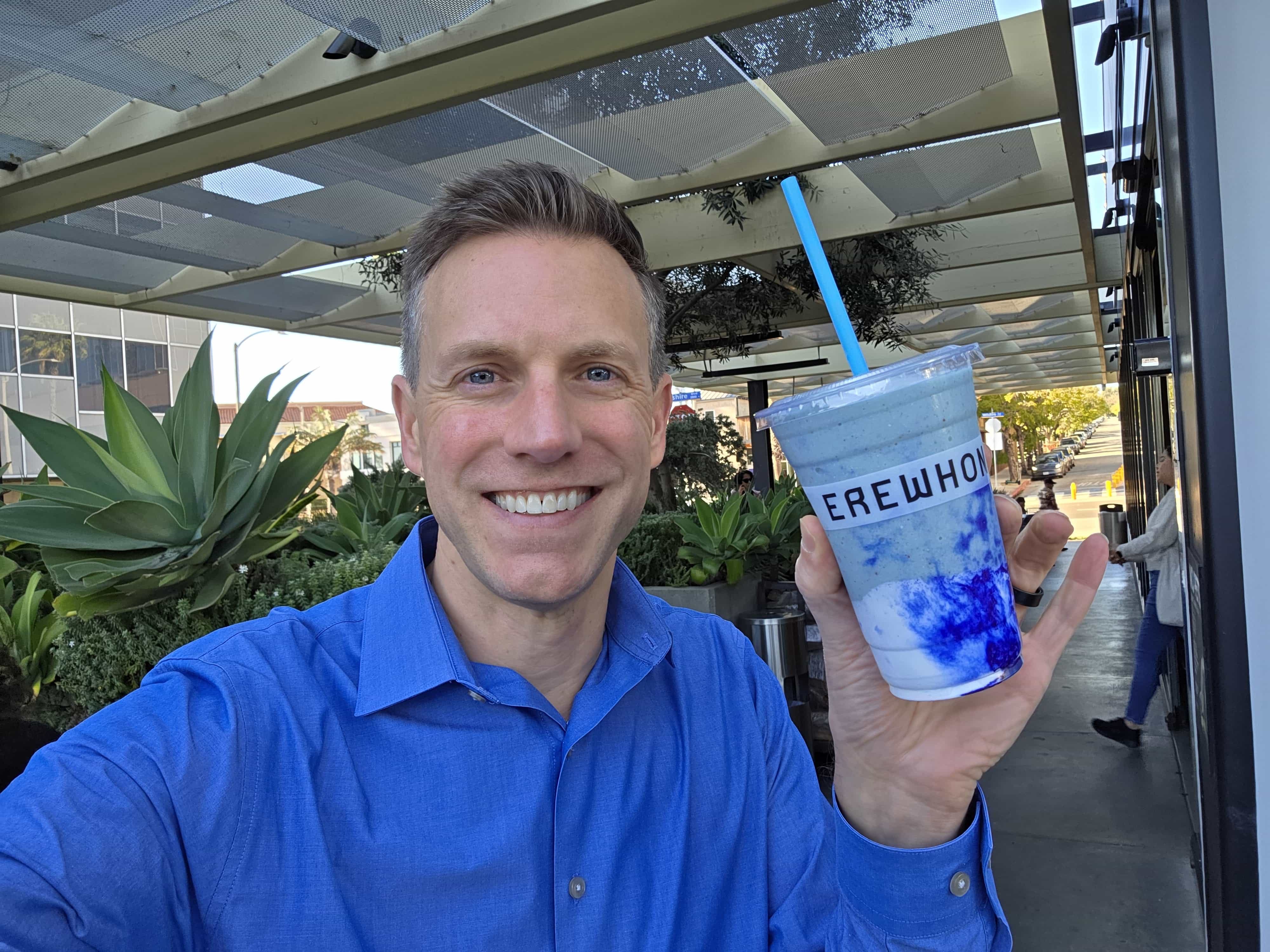
This week was all about getting back into my groove after CES in Las Vegas. I also did something a little wild. I switched my SIM card back into an Android phone.
It’s a big move, and one that’s taken some getting used to. I’m not even sure it will last. But after using the Samsung S25 Ultra almost exclusively in Las Vegas for the entire week, I was reminded just how much I like certain aspects of Android. The simplicity. The customization. And especially the ability to make the phone work exactly the way I want.
To be fair, Apple has made major strides in customization. In some areas, iOS has even surpassed what Android offers. But for me, it really came down to voice search and AI. These are two areas where the iPhone still lags significantly.
Switching to Android comes with a lot of implications. My texts are a mess. I don’t have a single charger that works for my phone, watch, and earbuds. The Pixel Watch I’m wearing runs different software than the phone, and the syncing is not great. Do Not Disturb and Bedtime Mode are the biggest offenders. There are also things I used to do effortlessly that just don’t work the same way right now.
That said, part of my job is understanding technology from all angles. Going through this kind of tech pain is actually a good thing. It gives me better perspective.
Two things I noticed immediately. Social media and content creation are still better on the iPhone. So are videos and a lot of pictures. But voice search, and especially access to AI tools like Circle to Search and AI Mode, are infinitely better on Android.
I’ll keep you posted on how long this new setup lasts - it may not be very long. Also, keep in mind I’m not your “typical” phone person; I still have my iPhone in my backpack for lots of reasons.
AI just changed for iPhone and Android users
It’s a huge week for AI. Before your eyes glaze over, this one actually matters, because it affects just about everyone using an iPhone or Android phone.
This week, Apple effectively acknowledged it could not deliver its own AI fast enough for the iPhone and is turning to Google, specifically Gemini, to make Siri smarter.
A little background. I was at WWDC in 2024 when Apple unveiled something called Apple Intelligence. At the time, ChatGPT was exploding, AI was the story everywhere, and Apple needed a big response.
On stage, Apple showed off Apple Intelligence, a collection of AI features. Some were fairly lightweight, like image generation, but the most important promise was a dramatically smarter Siri. Apple said Siri would be able to tap into your photos, emails, texts, and notes, allowing you to ask complex, natural questions about your own data.
The pitch was compelling. You could ask things like questions about past emails or information buried somewhere on your phone, and Siri would surface the answer. Apple also emphasized privacy. Most of the processing would happen on the device, and if something needed to be handled in the cloud, it would go to Apple’s private compute servers, where the data would be processed and then deleted immediately.
It all sounded great. Apple even marketed the next iPhone around many of these features.
Fast forward two years, and most of that vision still hasn’t materialized.
Now it’s clear this turned out to be far more difficult than Apple anticipated. This week’s announcement makes it official. Apple will rely on Google’s Gemini AI as the foundation for Siri’s intelligence.
What does that actually mean? It suggests Apple will use Gemini’s underlying AI capabilities to power the features it talked about on stage, rather than building everything from scratch itself. Gemini becomes the brain behind the scenes.
This does not mean Google suddenly gets access to all your Apple data. Apple says privacy protections remain in place. Gemini operates in the background, while Siri remains the interface you interact with.
I do not believe this is the end of the story. I think Apple eventually wants its own AI model running the show, but that could take years. Right now, Apple needs something that works.
When will users see this? Likely by the end of the year. And I actually think this could be a big win for iPhone users. So much personal data already lives in iCloud. Making that data accessible through AI could be incredibly powerful if done correctly.
Not to be outdone, Google followed up with its own announcement. The company is introducing a new Gemini feature called Personalized Intelligence.
This allows Gemini to tap into data you already have stored with Google, things like Gmail, Google Photos, YouTube, and your search history, to better understand you and your needs.
For example, if you say, “I want to shop for new tires for my car,” Gemini can infer what car you drive by looking at emails, receipts, or photos. If you say, “I want to take a beach vacation,” it can factor in the airlines you usually fly, the hotels you prefer, and even the activities you tend to book.
This is all powered by Gemini, Google’s version of ChatGPT.
If your reaction is, “I don’t want this,” it’s worth noting that this is currently opt-in. It’s available to paid Gemini subscribers for now, with plans to expand later.
I’ve already been testing Gmail’s AI-powered inbox search, which can surface answers and summaries based on nearly 20 years of email. It can be very useful. This morning, I asked, “What’s my AAA number?” AI not only gave me my current number, but also surfaced older AAA numbers I’ve had over the years.
If you want to explore this yourself, you can toggle it on by opening Gemini, going to Settings, tapping Personalized Intelligence, and selecting which connected apps you want to use.
AI can feel unsettling, but I’m still optimistic about this idea of deeply personalized AI. That’s what these companies are racing to build. The upside is faster, more relevant answers, without digging through emails, photos, and search results manually.
The days of hunting and pecking for old information may finally be numbered, replaced by clear, synthesized answers drawn from your own data.
I tried California’s new DROP privacy tool. Here’s how it works.
This week, I walked through California’s new DROP website, short for Delete Request and Opt-Out Platform, run by the California Privacy Protection Agency. The goal is simple. Help Californians remove their personal data from data brokers that buy, sell, and share it.
Right up front, you have two ways to get started. You can sign in with Login.gov, or you can simply confirm that you’re a California resident. From there, the site asks for basic information like your name, date of birth, ZIP code, email address, and phone number. You’ll need to verify both your email and phone.
The most interesting and potentially confusing part comes next. DROP asks for your “unique identifiers.” These are things like your mobile advertising ID, identifiers tied to your smart TV, or even your car’s VIN. Data brokers use these IDs to track behavior and link data back to you, which is how your information ends up being sold in the first place.
Keep in mind, you have to include these in your request, but it will make it more effective.
Once you submit everything, California will start sending deletion requests to data brokers on your behalf. According to the site, that process begins in August and repeats every 45 days.
You can see a full list of data brokers included, and it’s eye-opening. There are more than 130 of them and counting. Data brokers have to register by the end of January, so CA officials are expecting hundreds more to join the list.
Fines can reach $200 per record per day if brokers don’t comply with the takedown notice.
You can select all of them, none of them, or pick and choose. You can also opt in to having future data brokers included automatically.
After submitting, you receive a DROP ID. This is important. Write it down. You’ll need it to check the status of your requests later and to download a copy of what was submitted.
So is it worth it?
If you’re a California resident, I’d say yes. Especially because it’s free. It does remove your data from many well-known brokers, including some public record style sites like Whitepages and Truth.com.
Compared to paid services, this is not as fast and doesn’t offer the same level of hands-on management. Those services often act immediately and may cover a wider range of sites, plus you can ask them to submit manual takedowns in some cases. But if you don’t want to pay, DROP is an excellent product.
DROP also won’t erase search engine results or news articles and might not stop spam calls that ignore the law.
Overall, California did a good job here. The site is straightforward, the process is manageable, and it gives people a real way to take action.
Food scanning apps worth a look
I was in Trader Joe’s recently when I noticed someone scanning food with an app. She told me she uses Yuka to check how healthy products are, which sent me down a rabbit hole of food scanning apps.
That’s how I ended up talking with the team at ZOE Health. Their app takes a different approach, focusing less on labeling foods as good or bad and more on encouraging variety, especially foods that support gut health.
I’ve been enjoying the app, their nutritional supplement, and their podcast. If you’re curious about what you’re eating and how it affects your health, ZOE is worth checking out.
This new phone brings back the physical keyboard
A lot of people were diehard BlackBerry fans. I liked mine, but I was never a devotee. When the iPhone arrived, I was happy to switch to its physical and virtual keyboard and I’ve never looked back.
That said, I know people who still swear they can type faster on a physical keyboard. I even know someone who still uses a BlackBerry.
At CES, I went hands-on with a prototype of the Clicks Communicator, a phone with a physical keyboard. It feels great in the hand and includes thoughtful features people miss, like a microSD card slot, a physical SIM, a headphone jack, and a programmable side button for things like voice-to-text, AI, or recording meetings. It even lights up when you have notifications, so you can leave it face down and still know something important came in.
The Clicks Communicator is expected to launch later this year for around $500, or about $400 if you pre-order. The company is positioning it as a secondary phone.
Tech tidbits
Spotify is raising prices on its Premium plans by $1 to $2 per month. If you’re on an individual or family plan, expect to see the increase on your next bill.
If you were affected by the recent Verizon outage, you can claim a $20 credit in the Verizon app. You’ll get a text if this applies to you. It is not being applied automatically.
If you get a call claiming to be from the Internal Revenue Service saying you owe back taxes, it’s almost certainly a scam. The IRS does not initiate contact by phone demanding immediate payment.
ChatGPT has launched a new standalone translation website, making it easier to quickly translate text.
Classic episodes of Sesame Street are now streaming on YouTube. I’m especially looking forward to watching the episode where Mr. Rogers visits the neighborhood.
Kind words
Vicki wrote:
“I am loving your emails. I enjoy the way your newsletters flow like you’re having a conversation with me personally. Thank you so much for sharing your experiences and recommendations.”
Jeff Becker shared this note:
“Enjoy your show and your thoughts on life and family.”
As always, appreciate the kind words. Although I do read each and every email I get, I’m not always able to respond to all of them in a timely manner.
A small reminder to keep things in perspective
One more thing that happened to me this week. For some reason, I am having absolutely no luck with my new car.
In Las Vegas, I scuffed the door scraping a pole. Then this week, while parking, I heard a little pop. I assumed it was some kind of tire thing, but when I checked, everything looked fine. Later that night, the Tesla app sent me an alert suggesting I check a tire because it might be flat.
Sure enough, there was a huge chunk of metal in it.
On the bright side, with just a few taps in an app, I scheduled mobile service to come to my house first thing the next morning. The tire was replaced in minutes. Of course, it involved spending money in the way I like least: just to get back to where you already were.
Still, I try to look at these moments as small speed bumps in the grand scheme of things. They are annoying, especially when they involve your car, but they are not the things you remember or dwell on long term. The hardest part is getting over the immediate psychological annoyance and the financial sting.
Life is about much more important things than a car being out of commission for a bit. Focus on friends, family, and enjoying the small moments, while keeping your eye on the bigger picture.
I’m probably overly optimistic, but I can’t imagine living any other way.
That’s all for now. I’ll see you on the radio on KFI AM 640, live from 11 a.m. to 2 p.m. PT. Give me a call at 1-888-RICH-101, or just enjoy listening. You can also catch the replay Sunday night streaming on 710 WOR in New York, or subscribe to the podcast.
And please tell a friend about the podcast. I’d love to double those downloads this year.
Rich


