
I’ve been using Apple’s first foldable iPhone for a week, and if I had to sum up the experience in a few words, I’d say this: It grows on you.
When I first switched from the iPhone 18 Pro Max to the $2,000 iPhone Duo, I felt like I was taking a step backward. The front screen was smaller, some of my favorite apps weren’t optimized for the foldable screens, the volume buttons were in a strange place, and I suddenly had to use my fingerprint to unlock my phone instead of my face.
For a device that costs this much, that’s a lot of compromises.
But then after a few days. I started getting used to the differences. By the weekend, I was actually enjoying the experience. And now, after a full week, I can see why someone would choose this phone over a traditional iPhone.
That doesn’t mean it’s for everyone.
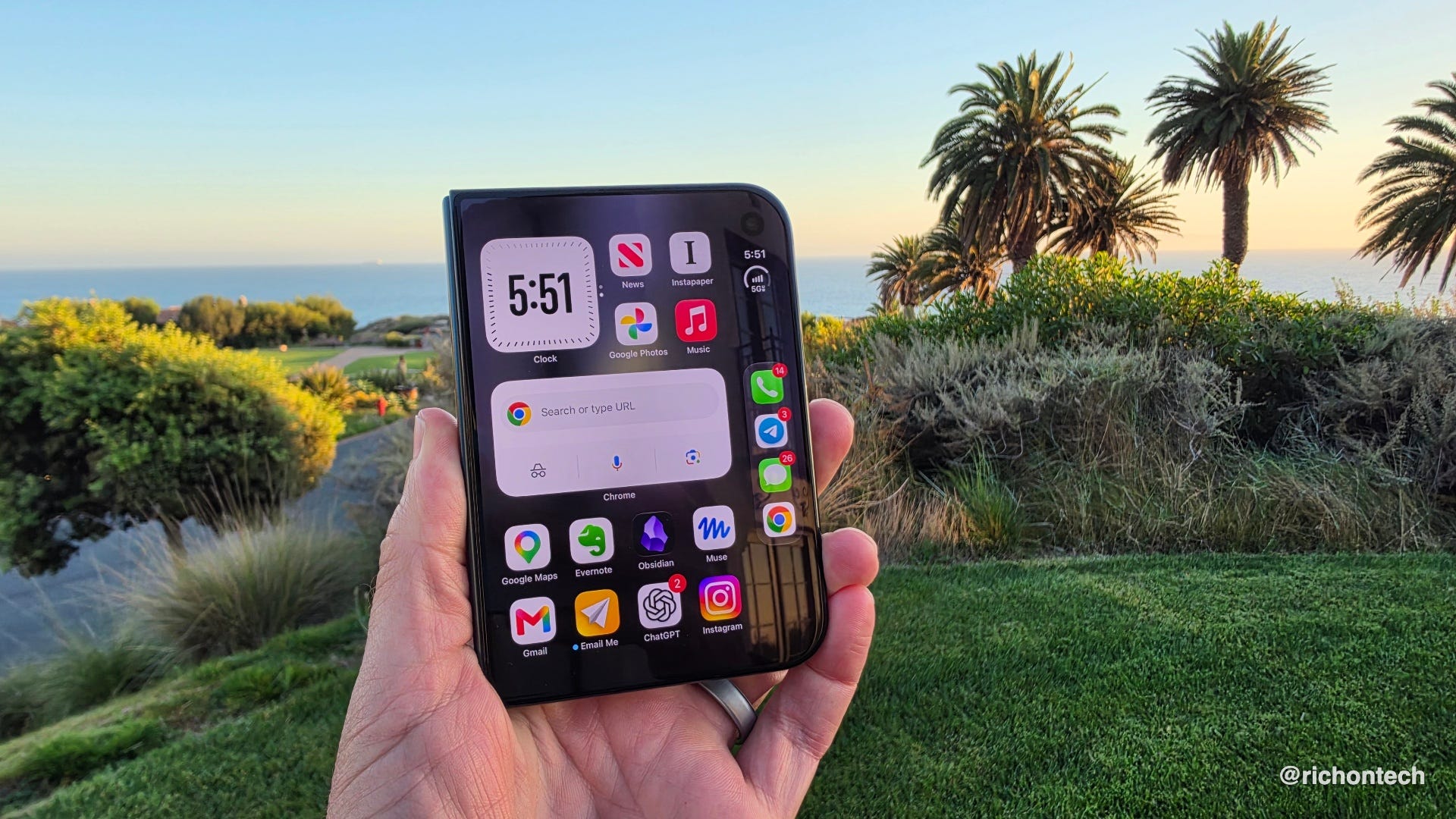
The best part is the tablet in your pocket
Let’s start with what Apple absolutely nailed: the form factor.
I’ve used lots of foldable phones over the years, and I think the iPhone Duo offers the best tablet experience of any of them.
The size, weight and proportions are just right. When you open it up, the screen feels like a small tablet that you can comfortably hold in one hand. It’s not awkward or unwieldy, which has been my experience with some other foldables. I think it’s the smooth, rounded edges that make a big difference.
The inside display has a matte finish that looks and feels fantastic.
I’ve found myself opening the phone more often than I expected, even for everyday tasks like browsing websites. Pages are easier to read, there’s more room for content, and everything just feels more spacious (unlike the outer screen, where things are a bit more cramped than you’re used to).
Typing is also easier than I anticipated - even on the unfolded screen. That’s not the case on other foldables I’ve used.
In fact, the tablet experience is so good that I could see this replacing a separate iPad for many people. If you’ve ever wished you could carry a tablet everywhere without actually carrying another device, this is the appeal of the Duo.
The small screen takes some getting used to
Here’s the trade-off. When the Duo is closed, you’re dealing with a smaller display than you might be accustomed to, especially if you’re coming from a Pro Max iPhone.
You simply see less content on the screen.
It’s not necessarily a dealbreaker, but it’s noticeable. Scrolling through social media, reading messages and navigating apps can feel a little cramped.
Posting Instagram Stories, for example, isn’t the greatest experience on that smaller outer display.
There’s also a learning curve with the buttons. Apple put the volume controls on top, which makes sense given the design, but it’s not where your fingers expect them to be.
These might sound like minor complaints, but when you use your phone dozens or hundreds of times a day, muscle memory matters.
The good news is that most of these annoyances started fading after a few days.
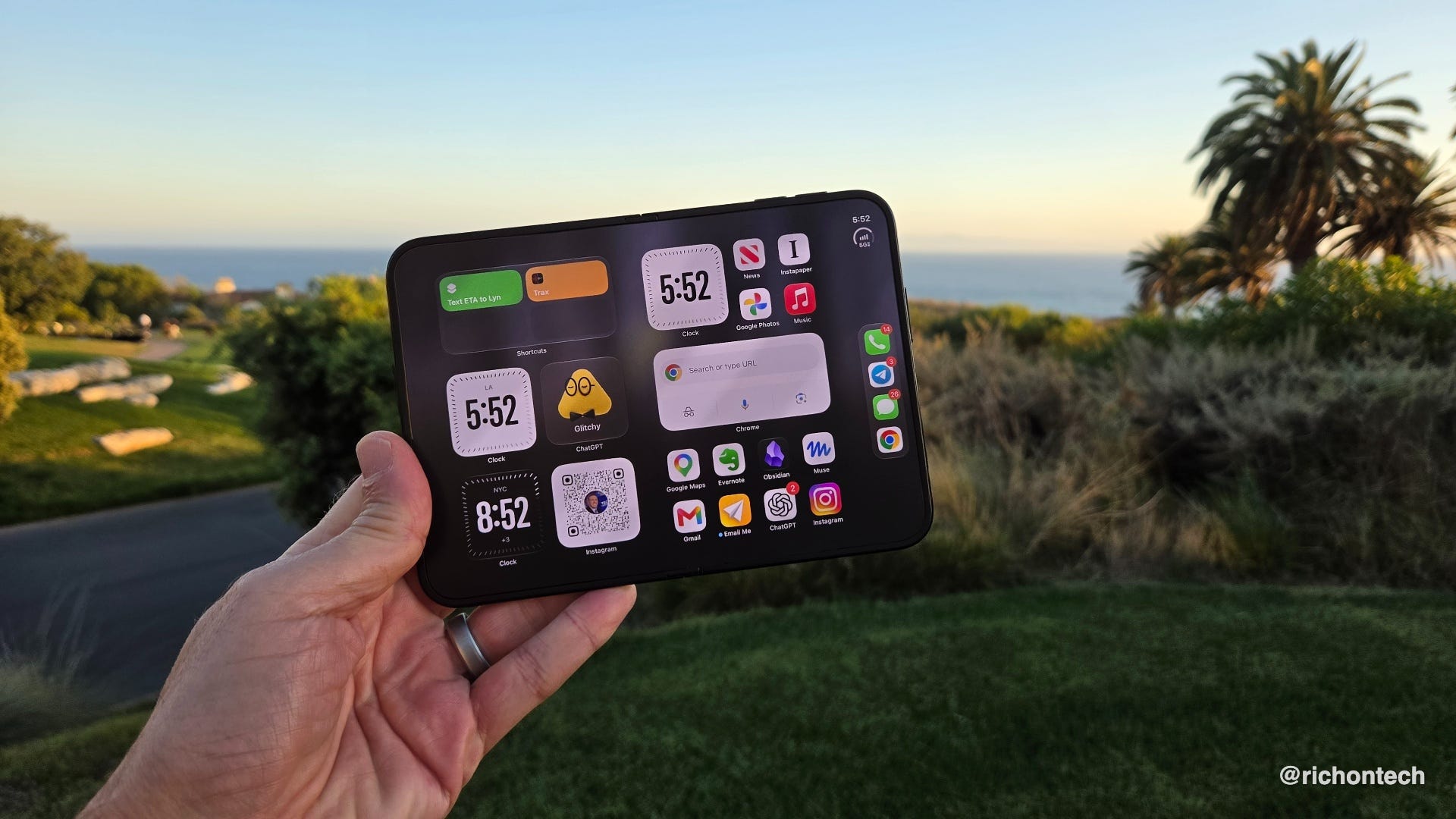
Apps are still a work in progress
One of the biggest challenges with the Duo is that not every app is optimized for its unique screens.
Some apps look great when expanded. Others feel like they were designed for a completely different device, because they were.
I’ve encountered apps that don’t take full advantage of the larger display or behave awkwardly when switching between screen sizes.
It reminds me of the early days of the iPad, when developers were still figuring out how to make their apps work on a bigger screen.
I don’t necessarily blame Apple for this. Developers need time to update their apps, and this is an entirely new form factor for the iPhone.
Thankfully, Apple includes controls that let you rotate or expand apps to make them more usable. Those options help quite a bit.
Still, if you’re buying the Duo today, understand that the software experience isn’t as consistent as it is on a traditional iPhone.
But I can tell you, even in the week of having this phone, I’ve watched lots of apps get updated to work better on this foldable form factor. I don’t want to knock Android, but this is record time for updates to apps that still seem all over the place on Android foldables.
I really miss Face ID
Of all the compromises Apple made with the Duo, this is the one that bothers me the most.
There’s no Face ID.
Instead, you unlock the phone using Touch ID, with a fingerprint sensor built into the button.
Touch ID works, and after a week I’ve gotten better at using it. But I didn’t realize just how convenient Face ID had become until it was gone.
With my regular iPhone, I can pick it up, glance at the screen, check my notifications and unlock it almost without thinking.
With the Duo, you have to be more deliberate. Rest your finger for a moment and that will reveal your notifications. Rest it longer and it will take you to your home screen.
Again, a small thing, but you do notice it.
I also experimented with unlocking the phone using my Apple Watch, but I don’t like how often the phone unlocks when you’re using that method.
For me, Face ID is one of the best features of the iPhone - I suspect it will be on Duo 2.
The cameras are good, but the experience is complicated
Coming from an iPhone 18 Pro Max, taking pictures on the Duo feels like a step backward.
That’s not to say the photos are bad. The pictures I’ve taken look excellent.
The issue is the overall camera experience.
There are multiple ways to take pictures depending on whether the phone is open or closed, which camera you’re using and whether you’re trying to take a selfie.
One of the benefits of a foldable is that you can use the better rear cameras to take selfies while seeing yourself on the outer screen. But on the Duo, I found that process more complicated than it should be.
On Androids, you can just hold up a palm or say a verbal command to snap a photo. That feature isn’t here. Instead, you get something called Smart Take, but in my experience, it’s not the best at automatically capturing photos when you smile. My camera roll is littered with lots of mis-takes.
If photography is your top priority, I’d still lean toward one of Apple’s Pro models.
Charging has been a little frustrating
The Duo doesn’t fit properly on the wireless charging pad in my car, so I’m no longer getting the extra charge I typically pick up while driving.
I’ll figure this out, but it’s a good reminder that changing to a new form factor can affect more than just how you hold your phone. It can change how you use accessories and charge your device throughout the day.
It’s a phone that changes your habits
One of the more interesting things about the Duo is how it changes the way I use my phone.
With a regular iPhone, everything happens on one screen. You pick it up, do what you need to do and put it away.
With the Duo, there’s a decision to make. Do I use the smaller outside screen, or do I open it up?
At first, that extra decision felt like friction.
But over time, I started opening the phone more naturally. Instead of struggling to read a website on the smaller display, I’d unfold it. Instead of squinting at content, I’d give myself more screen space.
The larger screen makes activities that used to feel cramped on a phone much more enjoyable.
That’s when the Duo started making sense to me.
It’s not just a regular iPhone that happens to fold. It’s a different way of using a phone, and you have to give yourself time to adjust.
Is the iPhone Duo worth $2,000?
This is where things get interesting.
At $2,000, the Duo is an expensive phone. And unlike a traditional Pro iPhone, you’re not necessarily getting the best version of every feature.
You’re making compromises with the cameras, Face ID, the smaller outer screen and even some of your existing charging accessories.
But you’re getting something that a traditional iPhone can’t offer: a useful tablet that fits in your pocket.
And after a week, I think Apple has done an excellent job delivering that experience.
If your priority is having the best camera system, the most familiar iPhone experience and the fewest compromises, I’d stick with a traditional iPhone Pro.
But if you love the idea of having a larger screen available whenever you need it, the Duo is compelling.
For someone who reads a lot, browses websites, works on their phone or just wants more screen space without carrying another device, I can absolutely see the appeal.
My verdict after one week
The iPhone Duo is a fascinating first-generation product.
It isn’t perfect, and in some ways it feels like you’re taking two steps forward and one step back.
But Apple got the most important part right: the experience of opening the phone and using it as a tablet. That’s the feature that makes the compromises worthwhile.
My biggest surprise is how much my opinion changed over the course of the week. On day one, I was frustrated. A few days later, I was getting comfortable. Now, I’m finding reasons to open it up throughout the day.
Would I recommend it to everyone? Probably not.
But would I recommend it to someone who has always wanted an iPad in their pocket and is willing to pay a premium for that convenience? Yes.
My biggest advice is this: If you try the iPhone Duo and feel frustrated on the first day, don’t give up on it immediately.
Give it a few days.
You might find, as I did, that it grows on you.
Have questions about the iPhone Duo? Leave them in the comments. I’ve been using it every day for the past week and I’m happy to share more about the experience. I’ll also have more coverage Friday morning on KTLA 5 and a deeper discussion Saturday on Rich On Tech, starting at 11 a.m. Pacific on KFI AM 640.