
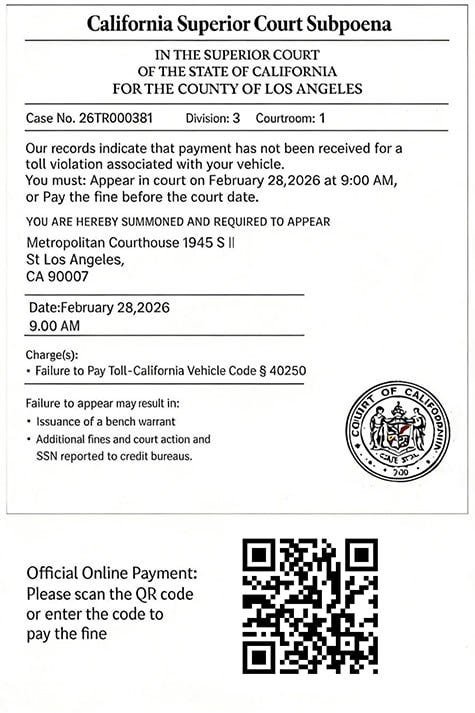
A listener recently sent me a screenshot of a fake court summons that looks surprisingly convincing at first glance.
Sandra said her mom received the notice by text message, warning that she had an unpaid toll violation and needed to appear in court or pay a fine immediately.
But Sandra actually works for the courts and quickly realized something wasn’t right.
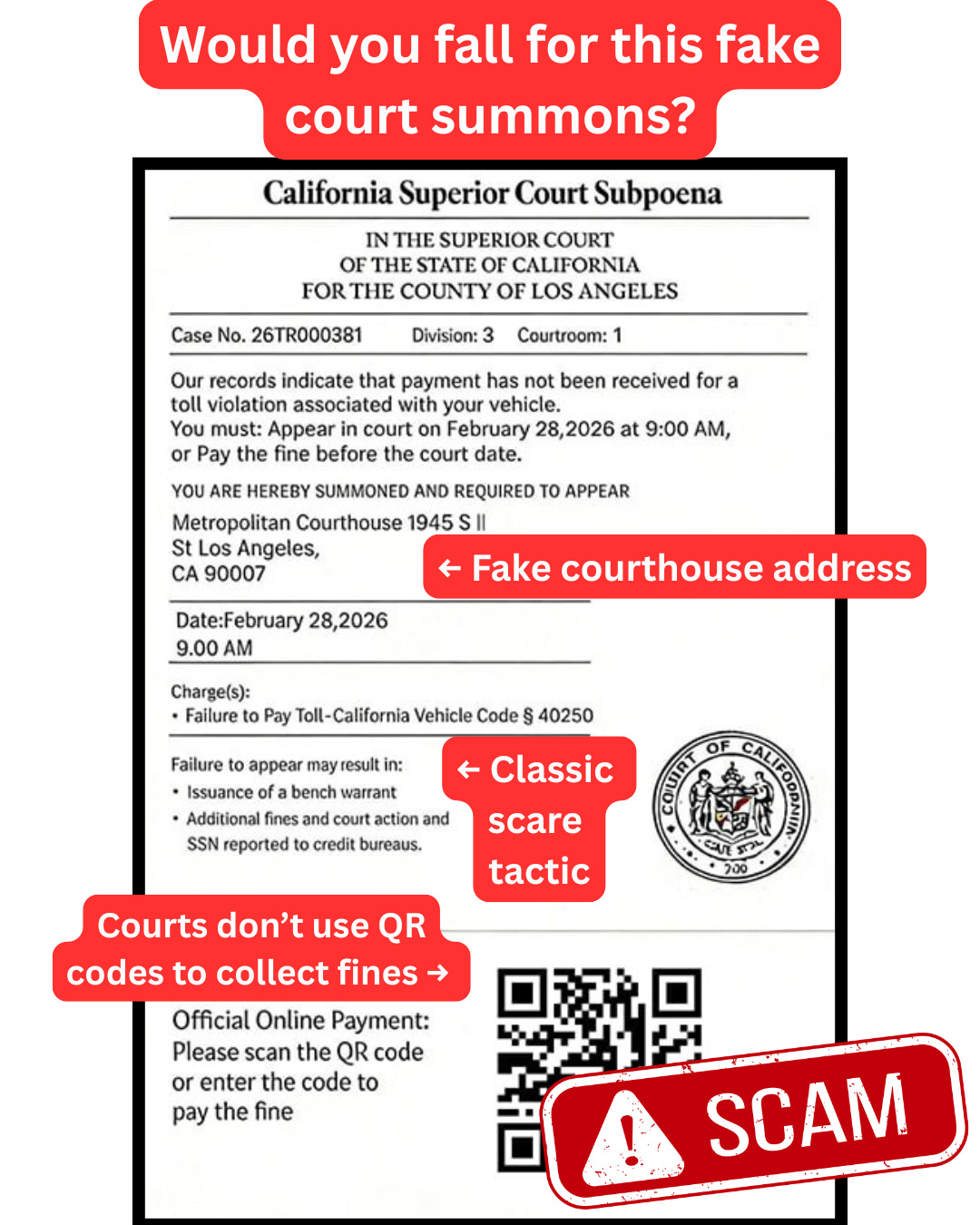
“This looks real at first,” she told me. “But the seal is wrong, the case number doesn’t match the format used for traffic citations, and most importantly — courts do not send notices by text.”
How this fake court summons scam works
The message is designed to scare people into paying quickly.
The fake document claims there’s a toll violation tied to a vehicle and warns that failure to act could lead to serious consequences, including a bench warrant or additional fines.
At the bottom is a QR code that tells you to scan and pay the fine online.
That’s the key part of the scam.
Once scanned, the QR code can send victims to a fake payment page designed to steal money or personal information.
Red flags to watch for
There are several clues this notice isn’t legitimate:
Courts don’t send summons notices by text message
The court seal is incorrect
The case number format doesn’t match real traffic citations
The notice pushes you to scan a QR code to pay immediately
The courthouse address listed doesn’t appear to be valid
Scammers rely on urgency and fear to get people to act before they have time to double-check.
What to do if you get a message like this
If you receive a notice like this, don’t panic.
Instead:
Do not scan the QR code
Do not click any links or send payment
Look up the official court website or phone number yourself
Contact the court or toll agency directly to verify
Never rely on contact information provided in the suspicious message itself.
Why scams like this are increasing
Scammers are increasingly using QR codes, fake documents, and official-looking seals to make their messages appear legitimate.
Text message scams in particular have exploded in recent years because they can reach thousands of people instantly.
The goal is simple: create urgency, make the message look official, and get people to pay before they question it.
Bottom line
If you ever receive a court summons by text, treat it as a red flag.
Legitimate court notices are typically sent by official mail or served in person, not through unsolicited text messages with QR codes.
If something feels off, pause and verify before taking action.
Thanks to Sandra for sending this one in and helping others avoid falling for it.