
Greetings and welcome to another edition of the Rich on Tech newsletter.

This week was mostly spent playing with Apple’s new products, including the iPhone 18 Pro Max and the new Apple Watch. Everything (except the foldable) is available now, and I’m sure some of you have already gotten your hands on the new gear, while others are trying to decide whether it’s worth the upgrade.
Also, one of the questions I get over and over is how to free up space on a phone. I’ve got some easy ways to do that a little further down.
The iPhone is great, but Siri is the real upgrade
Let’s start with the iPhone 18 Pro series.
If you have a recent iPhone Pro, this is probably not a necessary upgrade. With that said, I do think this is the best iPhone Apple has ever made. Over the past few years, Apple has continued to polish this product to the point where it’s just really good at so many things that I can barely find a flaw with it.
Battery life is even better than before. The camera continues to exceed my expectations, although I can’t say I’ve noticed a dramatic improvement this year. The new variable aperture is interesting, but I’m not sure it’s something I’ll ever manually adjust. I have noticed that the phone feels a little heavier in my hand than the previous model.
But the biggest day-to-day improvement for me isn’t really the hardware. It’s Siri AI.
If you have an iPhone 15 Pro or newer, you can get access to it, so you don’t necessarily need a new phone. There is a waiting list, though, and you have to turn it on in Settings.
What makes Siri AI so interesting is that it can understand and search through the information already on your phone. Once you upgrade to iOS 27, your iPhone starts building a private, on-device index of things like your text messages, emails, photos, notes and information from Apple’s apps. Eventually, third-party apps will be able to contribute information as well.
That means you can ask Siri about something buried in an email from months ago, a detail someone sent you in a text message or information you saved in a note and forgot about. Instead of remembering where something is, you can just ask for it.
The privacy aspect is a big deal. Much of this processing happens locally on your iPhone instead of sending all of your personal information to an outside AI service. For requests that require more processing power, Apple can use its Private Cloud Compute system. Only the information needed to complete that request is sent for processing, and Apple says that data isn’t stored or made accessible to the company.
This is the version of Siri we’ve wanted for years. It finally feels like it understands the information we’ve accumulated on our phones and can actually help us do something with it.
And the best part is that you might not need a new iPhone to get it. If your phone supports Siri AI, upgrading to iOS 27 might be the biggest upgrade you can make this year.
My favorite Apple Watch feature is ridiculously simple
The other new product I’ve been wearing is the latest Apple Watch, and once again, the Apple Watch has gotten to the point where it’s just so good.
The screen is bright and readable from a wide variety of angles. Battery life for me has been excellent, and so has the fitness tracking. Apple also rebuilt the sensors on the back of the watch so they can take readings more often, which should provide more precise insights over time.
Apple also redesigned the Health app to give you more observations about your overall health.
But here’s the funny part. Of all the new features, the one I appreciate most is probably the simplest: I can finally put my step count right on the watch face.
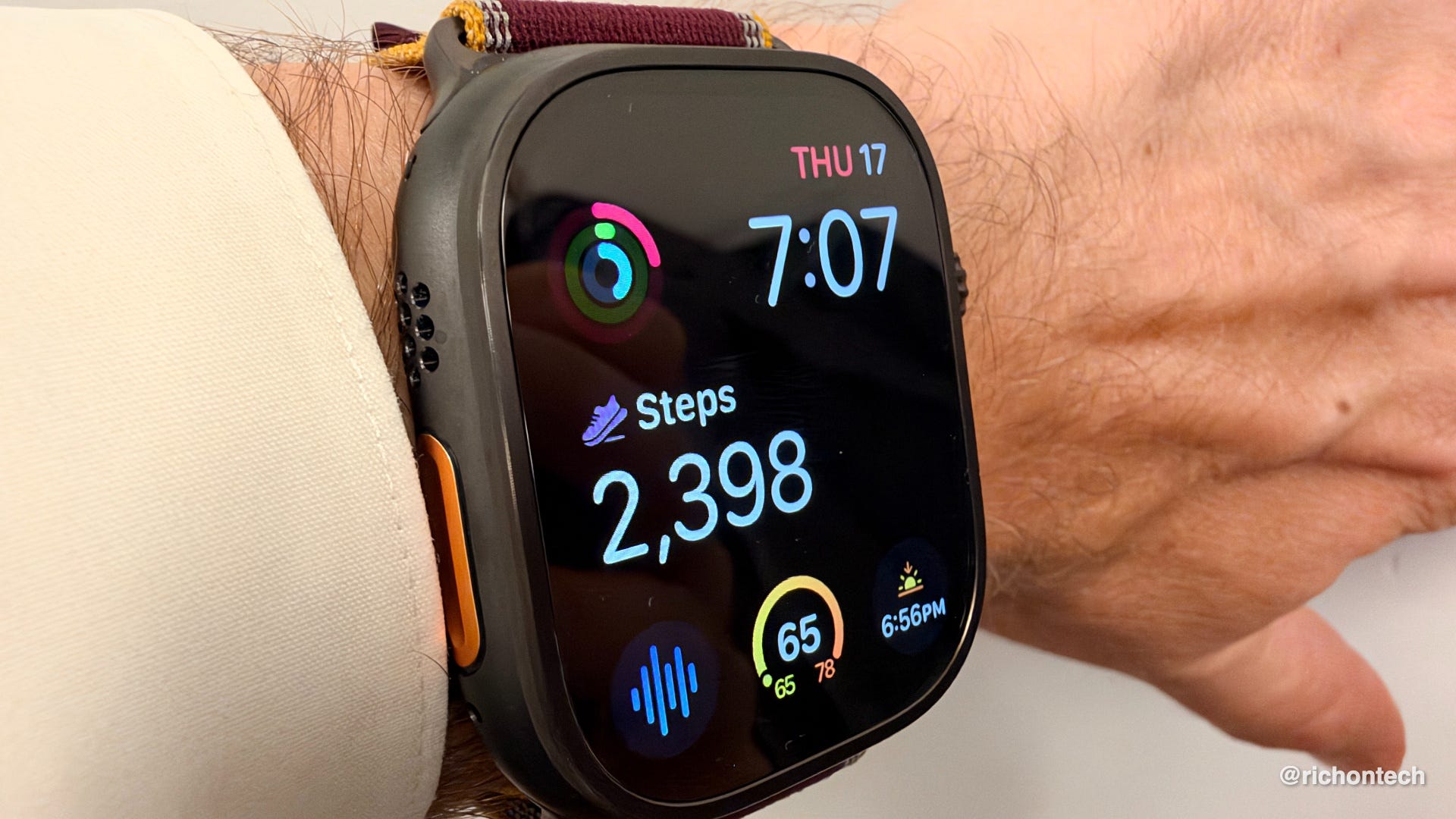
I know that sounds silly. It sounds like something the Apple Watch should have been able to do years ago, but it couldn’t. Now, on the Apple Watch Series 12 and Apple Watch Ultra 4, you can add your daily steps as a complication. Ever since I put it there, that’s the number I find myself checking most.
Apple’s activity rings have always done a great job motivating people to move, but there’s something about seeing your actual step count throughout the day that feels even more immediate. If I see I’m at 7,000 steps, I’m more likely to walk a little farther to get to 10,000.
Apple says the feature is enabled by the new processor in these watches along with a new step-tracking algorithm. So far, Apple hasn’t said whether it will come to older models.
I’m certainly not saying you should buy a new Apple Watch just to see your steps on the watch face. If you have an older model, the third-party app Pedometer++ can already add a step-count complication. Just keep in mind that you’ll need to give the app access to the necessary health and fitness data and in my testing, the on screen widget doesn’t seem to update in near real time like Apple’s does.
Still, 12 generations in, it’s kind of funny that one of my favorite new Apple Watch features is simply being able to see how many steps I’ve taken.
A few other neat features on the new Apple Watches are worth mentioning.
The Shazam widget can now automatically show you the song playing around you. It reminds me a lot of Now Playing on Google Pixel phones. If music is playing in the background, just rotate the Digital Crown to bring up the widget and you’ll see the song it recognizes. Previously, you had to take the extra step of tapping to identify the music.
There’s also a useful new accessibility feature called Sound Recognition. The Apple Watch can listen for things like doorbells, sirens, alarms and a crying baby, then alert you on your wrist even if your iPhone isn’t nearby.
To turn it on, go to Settings > Accessibility > Sound Recognition on your iPhone, enable the feature and turn on “Detect Using Apple Watch.” From there, you can choose which sounds you want it to recognize. Apple is still refining some of the detection algorithms, so you might get more notifications than you want at first.
Finally, two of the more futuristic features, Live Rewind and Siri Recap, are coming in beta later this year.
The smart ring I actually want to wear
I’ve been wearing the Oura Ring 5 for at least two months now, and I can tell you one thing: Oura has nailed the smart ring.
I actually replaced my wedding ring with the Oura Ring. Don’t worry, I asked my wife for permission first.
The first time I tested an Oura Ring, I didn’t like it. It felt too big and bulky on my finger, and some of the scores it gave me stressed me out.
This time around, the experience is completely different. The Oura Ring 5 is thin and light enough that it just blends into everyday life. Most importantly, it’s comfortable enough to sleep with.
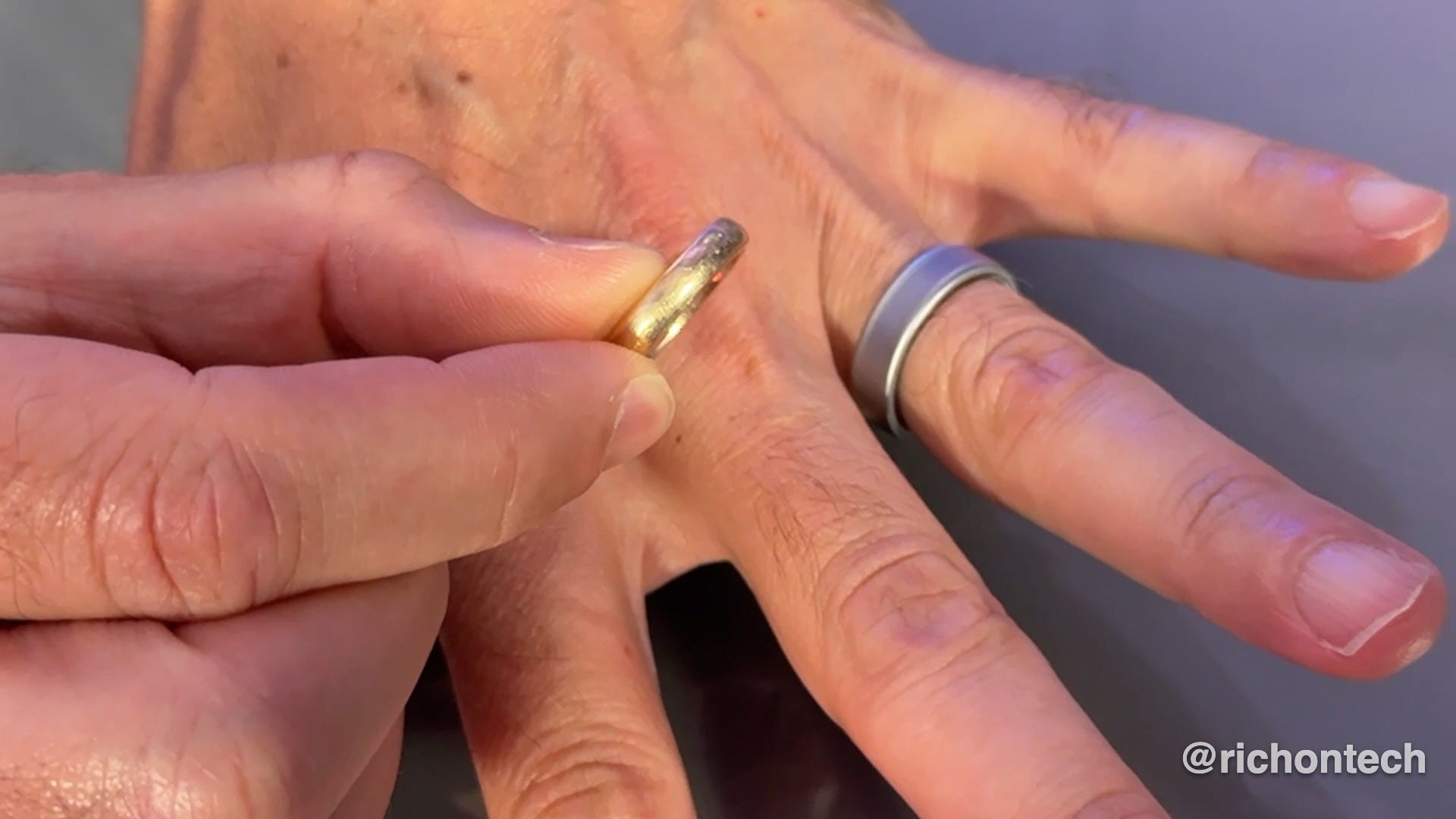
That means I’m getting health data basically 24/7. It tracks sleep and a wide range of other health metrics, and can even give you an indication that you might be getting sick. I can’t say every score and insight is useful to me, but I really like the idea of building a long-term history of my health. Over time, that could make it much easier to spot when something changes.
Battery life is rated at about a week, and that’s been pretty close to my experience. In fact, the ring blends into my life so well that I once forgot about charging it and walked around with a dead ring for two days before realizing it. Thankfully, charging is quick and easy.
Durability has also been good. Mine hasn’t gotten noticeably scuffed up, even though I’ve worked out with it many times.
My biggest complaint is workout tracking. It’s not particularly good at automatically recognizing workouts, so if that’s important to you, you’ll probably want to manually start one from your phone. Since there’s no screen or controls on the ring itself, you can’t start a workout directly from it.
And if you already wear an Apple Watch, you might wonder why you’d need this, too.
For me, the answer is sleep.
I don’t like wearing an Apple Watch to bed. I find it too bulky and distracting. The Oura Ring gives me a comfortable way to fill in that overnight gap, so I can get sleep and health data without having a watch strapped to my wrist 24 hours a day.
After two months, that’s probably the best compliment I can give the Oura Ring 5: most of the time, I forget I’m even wearing it.
How to free up space on your phone fast
This is one of those questions I get over and over: How do I free up storage on my phone?
On this week’s Quick Tip on TV, I shared my tried-and-true methods.
First, understand the difference between the storage on your phone and your cloud storage. They’re not the same thing, and deleting something from one can sometimes delete it from the other. Make sure you know where your important photos, videos and files are backed up before you start clearing things out.
Then, if you need space fast, look for large videos you no longer need. Deleting just a few can free up several gigabytes in seconds.
Beyond that, iPhone, Samsung and other Android phones have built-in tools that can show you exactly what’s taking up the most room and help you find apps and files you probably don’t need anymore.
Watch the video and check out my full recommendations here.
Sponsored by Surfshark
A VPN is one of those tools you might not think about until you need it. I especially like having one when I’m traveling, connecting to public Wi-Fi or just want a little more privacy online.
Surfshark VPN encrypts your internet connection and masks your IP address, which can help keep your online activity more private. One of its biggest advantages is that a single subscription covers an unlimited number of devices. That means you can use it across your phone, laptop, tablet, TV and other compatible devices without worrying about hitting a device limit.
Surfshark also includes CleanWeb, which can block ads, trackers and annoying pop-ups while you browse. There’s even a cookie pop-up blocker that automatically declines many of those consent requests we’re constantly clicking through.
Another handy feature is Alternative ID. It can generate an alternate name and proxy email address that you can use when signing up for websites or services where you’d rather not hand over your primary email. Messages still reach you, but the website doesn’t get your real address.
And a VPN can be useful while traveling. Since you can choose a server in another location, it can help you securely access websites and services you normally use at home.
Surfshark has a special offer for Rich on Tech readers: $2.49 a month plus three extra months, with a 30-day money-back guarantee.
Thanks to Surfshark for sponsoring Rich on Tech.
Another Prime Day is coming
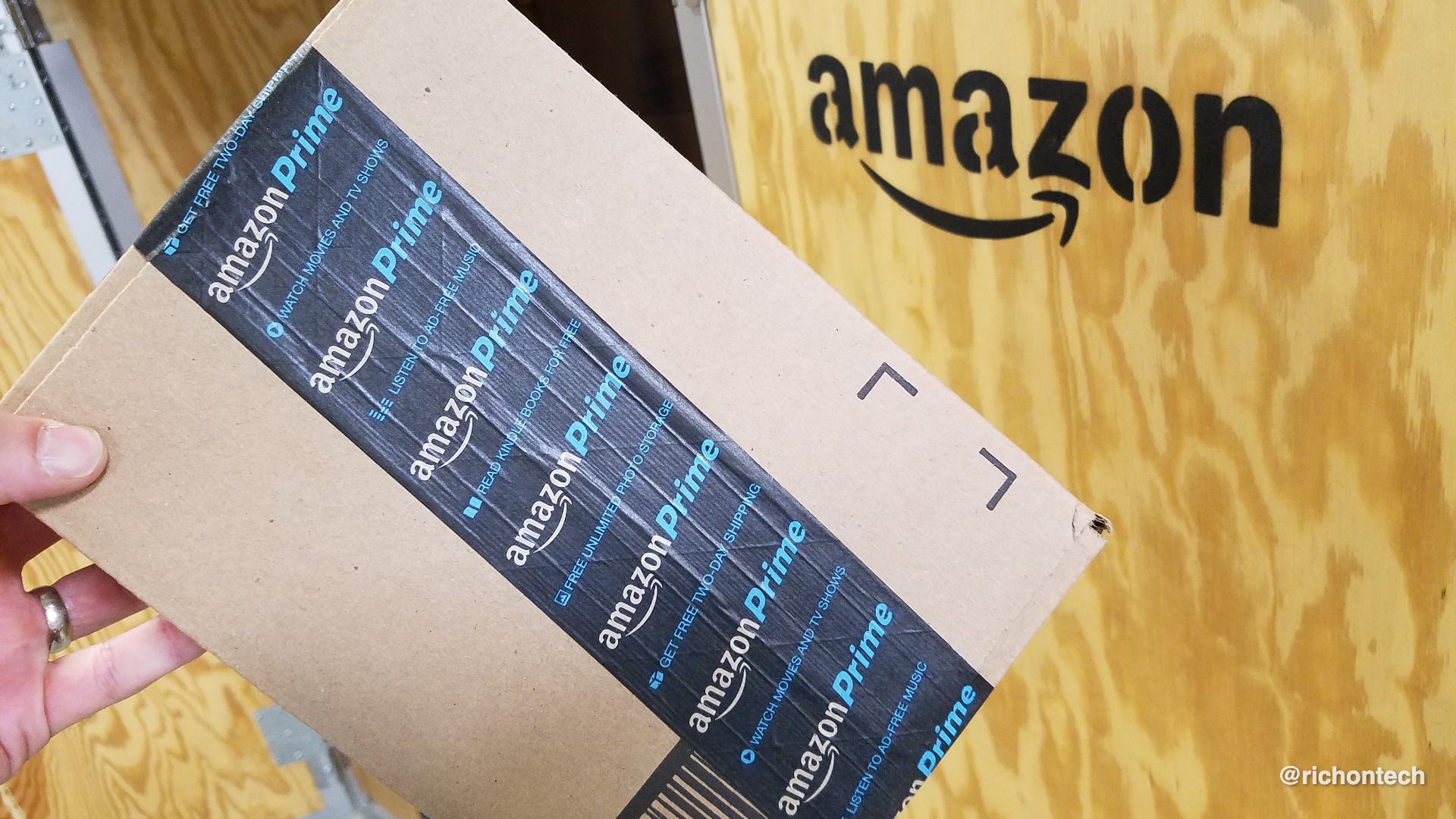
This one is called Prime Big Deal Days, and it’s happening October 6 and 7. Amazon is promising millions of deals, as usual, but there’s a new twist this time called Today’s Big Deals. Special deals will drop three times a day at midnight, 8 a.m. and 1 p.m. Pacific.
There are also a few deals you can take advantage of right now. Amazon devices are already on sale, Prime members can get two free Amazon First Reads Kindle books and four months of Audible Standard for 99 cents a month. Eligible Prime members can also get four months free of Amazon Music Unlimited.
There’s also $20 off a Grubhub order of $30 or more with the code DEALS20. And if you really want to go big, Prime members can get a $1,500 Amazon gift card when they buy or lease an eligible new vehicle through Amazon Autos.
My biggest advice is to prepare now instead of waiting for Prime Day.
Start putting things you actually want into your cart or save them to a list. That way, you can easily watch for price drops once the sale begins.
You can also set up deal and price alerts with Alexa Shopping. If you know exactly what you want, you can set a target price and even have Alexa automatically buy an eligible item if it hits that price.
And don’t forget to check price history. Amazon now shows up to 365 days of pricing information on hundreds of millions of products, which can help you figure out whether that “deal” is actually a good one.
One more trick I like: look through your previous purchases. If something you regularly buy is discounted, Prime Day can be a good time to stock up.
Tech tidbits
Meta has a new AI agent called Muse. I’ve been trying it, and it’s actually quite good. It can connect to services you use, browse the web and actually take actions on your behalf. That includes things like filling out forms, booking travel and making purchases. It can also connect with services like Instagram, email and your calendar.
If you try Muse, be sure to check the connected apps and permissions in Settings. This is powerful stuff, but you’re also potentially giving it access to a lot of personal information.
Snap is getting closer to launching its $2,200 SPECS. These are chunkier than your typical smart glasses, but they also have displays that can put augmented reality apps and information into the world around you. Snap is also introducing a separate charging case with cellular connectivity, so the glasses can stay connected when you’re away from Wi-Fi. And if you’re in Los Angeles, you’ll be able to try SPECS in person at Westfield Century City starting October 1.
Samsung is bringing Android 17 to more of its phones. The update, through One UI 9, is rolling out to the Galaxy S26, S26+ and S26 Ultra. Samsung typically rolls out software updates in stages, so you can check for an update now, but it may take a little while before you actually see it.
Spectrum products are now available in former Cox markets. If you’re a Cox customer, you don’t need to do anything right now. Your service will continue to work. But it may be worth checking Spectrum’s current offerings because you could find lower pricing, faster speeds, new customer bonuses or internet plans with no data caps.
Watch out for this international calling gotcha. Travel expert Zach Griff discovered that while roaming in Greece, calls to local numbers made over Verizon Wi-Fi Calling were treated as if he were calling from the U.S. That resulted in $75 in international long-distance charges, even though he had a TravelPass.
The lesson: when you’re overseas, avoid using your U.S. carrier’s Wi-Fi Calling to dial foreign numbers. Use WhatsApp or FaceTime Audio instead, or make the call through a local SIM or eSIM. And remember, simply having a travel eSIM doesn’t protect you if your U.S. line is still placing the call.
What I bookmarked this week
Bcengi: There are a million travel eSIMs out there, but I like the approach Bcengi takes. Instead of buying a new plan for every trip, you install one eSIM and load money onto your account. As you travel, it deducts from that balance based on the per-gigabyte rate in each country. The balance doesn’t expire, and the same eSIM works in more than 200 countries. It’s sort of like keeping a prepaid travel data card on your phone.
Frozen Pii: I talk about freezing your credit all the time, and Frozen Pii is a handy resource that walks you through the process. It explains how to get and review your credit reports, freeze them with the major bureaus and protect other pieces of your identity. There’s also information for people who are already dealing with identity theft.
Draw Things: I saw this app demonstrated at Apple Park and thought it was pretty cool. It lets you generate images locally on your iPhone, iPad or Mac, so you can use generative image models without sending everything to the cloud. It’s free, works offline and was fast when I saw it in action.
Keybr: Want to type faster? Keybr is a simple website that helps you practice typing and tracks things like your speed and accuracy. It gradually introduces different keys based on where you need practice. Now I just need to find the Keybr equivalent for improving my handwriting.
Octarine: I’m always looking for a better note-taking app, and Octarine checks a lot of my boxes. Your notes are stored locally as plain Markdown files, so you’re not locking everything into some proprietary format. But you don’t really have to think about Markdown while you’re using it. What caught my attention is the built-in calendar with daily and weekly notes, which is exactly how I like to organize things. It also has quick capture, search and optional AI features. Your notes stay on your device and are stored as plain Markdown.
Q&A: Scanning old photos
Robert asks:
A while back you recommended a Kodak scanner for slides and negatives. With all the newer photo scanning apps out now, do you still recommend the Kodak scanner?
I also have an older laptop that I upgraded to Windows 10. I’ve backed up my files to an external drive and I’m thinking about resetting the computer to improve performance. Will that send it all the way back to the original factory setup?
I’d still pick the Kodak scanner over a phone app if image quality is your priority. If you just want something quick and easy from your phone, Photomyne is a good option.
As for your laptop, using Reset this PC reinstalls Windows, but it doesn’t necessarily send the computer back to exactly how it came from the factory. Windows gives you the option to keep your personal files or remove everything. Your installed apps and many settings will be removed, so you’ll need to reinstall the programs you use.
Since you’ve already backed up your important files, you’re in a good position to do a clean reset. Just double-check that backup before you start.
One more thing: Windows 10 is no longer under regular support. Microsoft offers Extended Security Updates through October 2027, but if your computer supports Windows 11, I’d consider upgrading instead.
Feedbag
A few notes from viewers and listeners this week:
Tina wrote, “Always love your stories and radio broadcasts,” before asking for help getting her Oura Ring to play nicely with her iPhone.
Darfield confirmed something I noticed too: the S Pen on the Galaxy S26 Ultra can fall out if it’s not inserted just right.
Ashley used Claude to mock up a redesign of her business’s website and came away impressed: “Oh my goodness what a powerful tool this is.”
Steve had two observations: no Face ID on the iPhone Duo is a bummer, and a hard restart still fixes an amazing number of tech problems. Agreed.
And Robert followed up after using one of my tips from KTLA and the newsletter, signing his email simply, “Thankful fan.” Appreciate that!
I love hearing from you, even though I can’t personally respond to every message. I read as much as I can, and your notes often inspire what I cover next.
That’s going to do it for this week. The best thing you can do is forward this newsletter to a friend who could use a little more tech knowledge.
Be sure to listen to my radio show Saturday at 11 a.m. PT on KFI AM 640, catch the replay Sunday night at 8 p.m. ET on 710 WOR in New York, or subscribe to the podcast and listen anytime.
Rich