
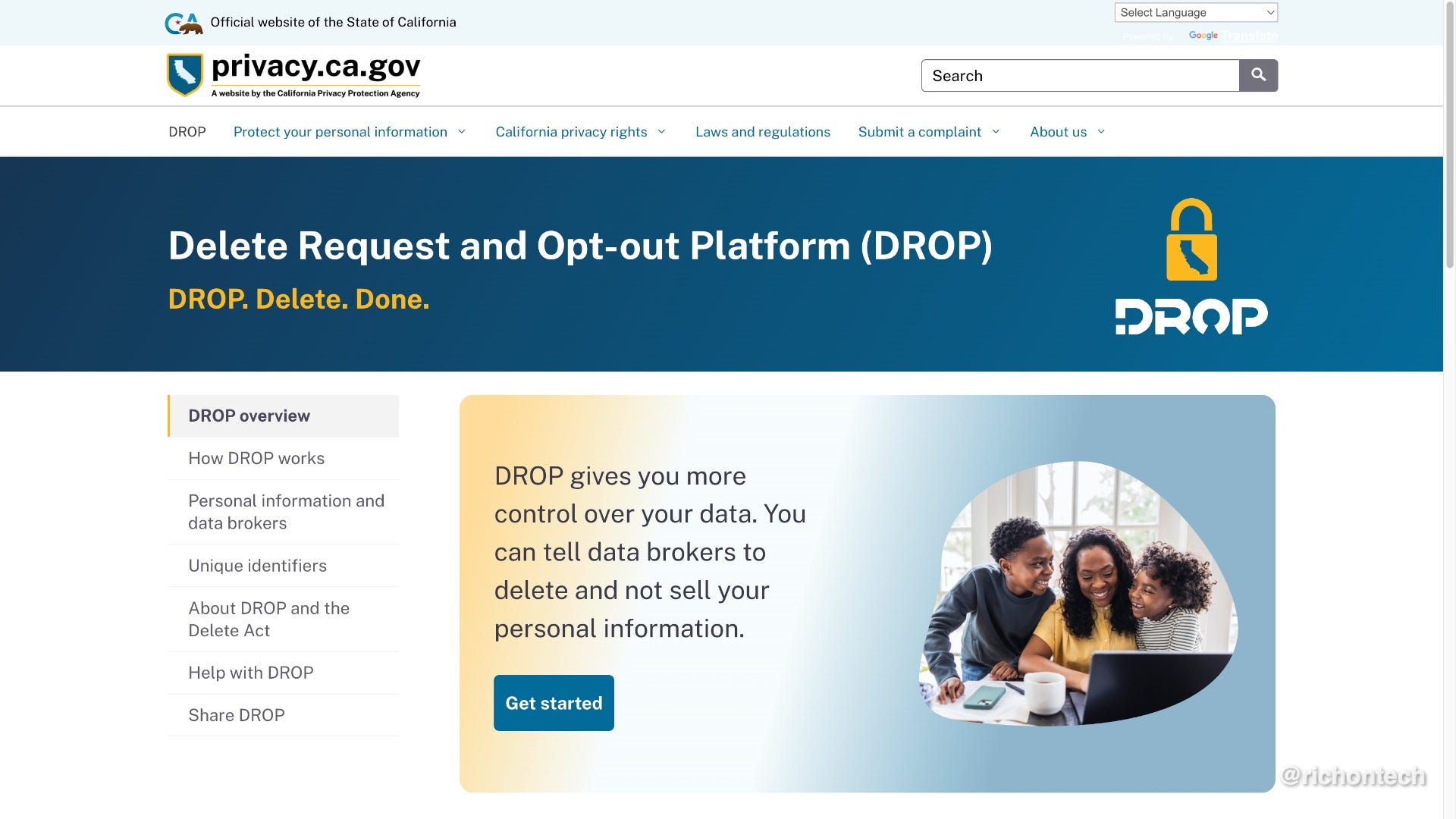
OFFICIAL SITE TO SIGN UP: https://privacy.ca.gov/drop/
I got an update on California’s new DROP system, which recently went live with deletions, and the early numbers show just how much interest there is in getting personal information off the internet.
Tom Kemp, Executive Director of the California Privacy Protection Agency, told me that more than 400,000 Californians have already signed up for DROP, with roughly 15,000 to 20,000 more people registering each day.
And the deletions have started. In the first days of processing, more than 8 million records have already been deleted, according to Kemp.
DROP stands for Delete Request and Opt-out Platform. It gives Californians one place to tell hundreds of registered data brokers to delete the personal information they’ve collected about them.
These aren’t necessarily companies you’ve ever done business with directly. Data brokers collect, combine, and sell information about consumers, sometimes building detailed profiles that can include contact information, online activity, location, purchases, and other personal details.
The official website is privacy.ca.gov. That .gov ending is important since scammers could easily try to imitate a service like this.
I asked Kemp about one of the biggest concerns I’ve heard: Aren’t you handing even more personal information over by signing up?

He says the system was designed to avoid that problem. The information submitted to DROP is protected using hashing, which converts it into a secured string of characters. Data brokers run their own information through the same process and only learn there’s a match when they already have information associated with that person. If there is a match, they’re required to delete the data and report that back through the system.
You can submit basic information including your name, email addresses, phone numbers, date of birth and current or previous ZIP codes. There are also optional identifiers, including your phone’s Mobile Advertising ID, vehicle identification number and connected TV ID, which can help identify information held by brokers that track things like location, driving or viewing habits.
The potential benefit is simple: less personal information floating around means less information available for scammers, identity thieves and anyone else looking to build a convincing profile about you.
There are already paid services that contact data brokers on your behalf, and you can still use those alongside DROP. But California’s system is free and currently covers more than 650 registered data brokers.
There is also some enforcement behind it. Kemp told me brokers that fail to comply with deletion requirements can face fines of $200 per day, per California resident.
If you live in California and haven’t signed up yet, privacy.ca.gov is worth a few minutes. The most important part now is that DROP is no longer just collecting requests, the actual deleting has begun.