
Greetings and welcome to another edition of the Rich on Tech newsletter, this time coming to you from Alisal, where we’re celebrating my father-in-law’s milestone birthday. It’s been a busy stretch of special occasions lately!

This week was packed with new tech. Amazon unveiled new products, Apple announced an upcoming product launch, I’m writing this newsletter on a new Google device, and I attended Microsoft’s latest launch event.
Not to be outdone, Ring also introduced a new smart lock with a nifty feature.
So, let’s get right into it.
Amazon’s new tablets might finally give the iPad some competition
First up, Amazon, with arguably the most exciting tech announcement of the week: its new Alexa tablets.
I’m especially excited about these because, for years, I’ve pretty much exclusively recommended Apple’s iPad when someone asks me which tablet to buy. Yes, it costs more than the cheap tablets out there, but you get a lot for your money. You get the best selection of apps designed for a tablet, great accessories, excellent software, and an overall experience that’s hard to beat.
That’s why I’ve never really recommended Amazon’s Fire tablets. They were cheap, but they didn’t have access to the Google Play Store, which severely limited the apps you could use.
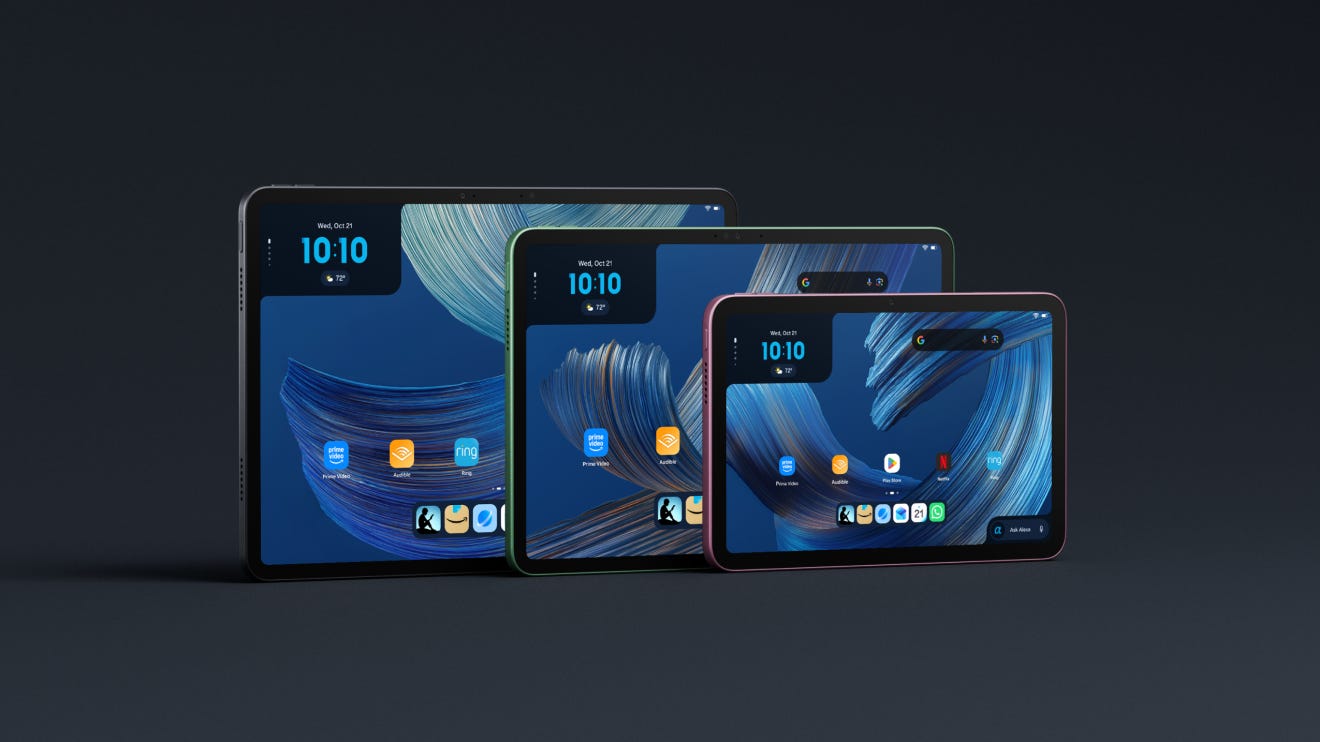
Well, I’m happy to report that Amazon has finally answered my wishes! The company just unveiled three new Alexa tablets, and they appear to address nearly all of my complaints.
I haven’t gotten my hands on one yet, but I’m hoping to soon for a full review. On paper, these look like they could finally be a great Android tablet recommendation, with prices starting below the iPad.
There are three sizes, and all have full access to Google Play, which means you can finally download all the apps you’ve been missing. Instead of relying on Amazon’s limited app store, these run Android with access to Google’s massive app selection. They also have Alexa+ built right in.
The tablets look thin and light, with upgraded processors and plenty of RAM. I’m especially intrigued by the optional Nanomatte display on the largest model, which reduces glare and gives the screen a more paper-like appearance. I think that could be great for reading Kindle books.
Speaking of Kindle, Amazon has added a smart reading mode. Open a book in the Kindle app, and the tablet automatically switches to a distraction-free experience. Notifications go silent, blue light is reduced, and Amazon says you can get up to 20 hours of reading on a single charge.
So yes, I’m excited about these. Prices start at $230 for the smallest model, $330 for the middle size, and $500 for the largest. The fancy Nanomatte version starts at $550.
I know that sounds expensive for an Amazon tablet, but let’s be real, who pays full price for Amazon hardware? I fully expect these to go on sale for $50 to $100 less eventually. If you plan on ordering one, just be aware there are no MicroSD card slots on these and the entry level pricing might include ads on the lock screen.
The new tablets start shipping October 14.
This Amazon feature is going viral
Speaking of Amazon, a feature in its shopping app went viral this week because it reveals what Amazon thinks it knows about you.
It’s called “About You,” and it shows the information Amazon uses to personalize your shopping experience. You can see everything from the products and brands it thinks you prefer to your hobbies, interests, and even who’s living in your house.
Some people have been pretty shocked by what they’ve found, but think about it. If you’ve been shopping on Amazon for years, the company has had plenty of opportunities to make assumptions about you based on what you’ve searched for, purchased, and reviewed.
The good news is that you can actually review this information and remove things that are incorrect or that you don’t want Amazon using to personalize your recommendations.
Here’s how to check:
Open the Amazon Shopping app.
Tap the little person icon at the bottom.
Tap Hello (or your name) at the top left.
Scroll down and look for About You
Tap it to see what Amazon thinks it knows about you.
Take a look. You might be amused, impressed, or a little creeped out by what you find.
They know more about you than you think
Sponsored by Incogni
Ever wonder how scammers already seem to know your name, phone number, address or even the names of your relatives?
A lot of that information is surprisingly easy to find online. Data brokers collect personal details from all sorts of sources, build profiles about you and then sell or share that information.
That’s why I use Incogni. It automatically sends removal requests to data brokers on my behalf, then keeps checking to make sure my information doesn’t pop right back up.
My dashboard says Incogni has already completed 794 removal requests for me and saved me nearly 596 hours of trying to do this myself.
Removing your personal information won’t stop every scam, but the less information scammers can easily find about you, the less they have to work with.
Want even more protection? Incogni’s Unlimited plan adds custom removals from thousands of additional sites and lets you submit links where you find your information exposed.
Get my spam-busting deal for 60% off with code RICHONTECH at checkout
Apple wants to take over your smart home
Apple also has a mini event coming up on Tuesday, October 13, in New York City. The company never says what it’s announcing in advance, but the invitation says “Welcome Home,” so we have a pretty good idea of what’s coming.
According to rumors, we can expect:
A new Apple TV
A new HomePod mini
An entirely new device called the Home Hub, which sounds like an iPad attached to a speaker base. The idea is to have one central place to control your smart home devices, run apps, display widgets, and even show off your photos when you’re not using it.
I’ll keep you updated on what Apple announces and hopefully get my hands on these products soon.
Personally, I think Apple has some catching up to do in the smart home market. But with so many people already using iPhones, this could be a good companion. Thanks to Matter, the smart home standard designed to make devices from different brands work together, many existing compatible accessories should work with Apple’s new products.
I especially like the idea of having one central screen to control everything in your home. And since so many people already have thousands of photos stored in iCloud, it could be a great way to actually enjoy those pictures instead of letting them sit on your phone.
Microsoft’s new laptop has a neat charging trick
This week, I also made a quick trip to San Francisco for a highly technical Microsoft launch event. It was a relatively small gathering, but they had some tech heavyweights on hand, including Microsoft CEO Satya Nadella and Nvidia CEO Jensen Huang.
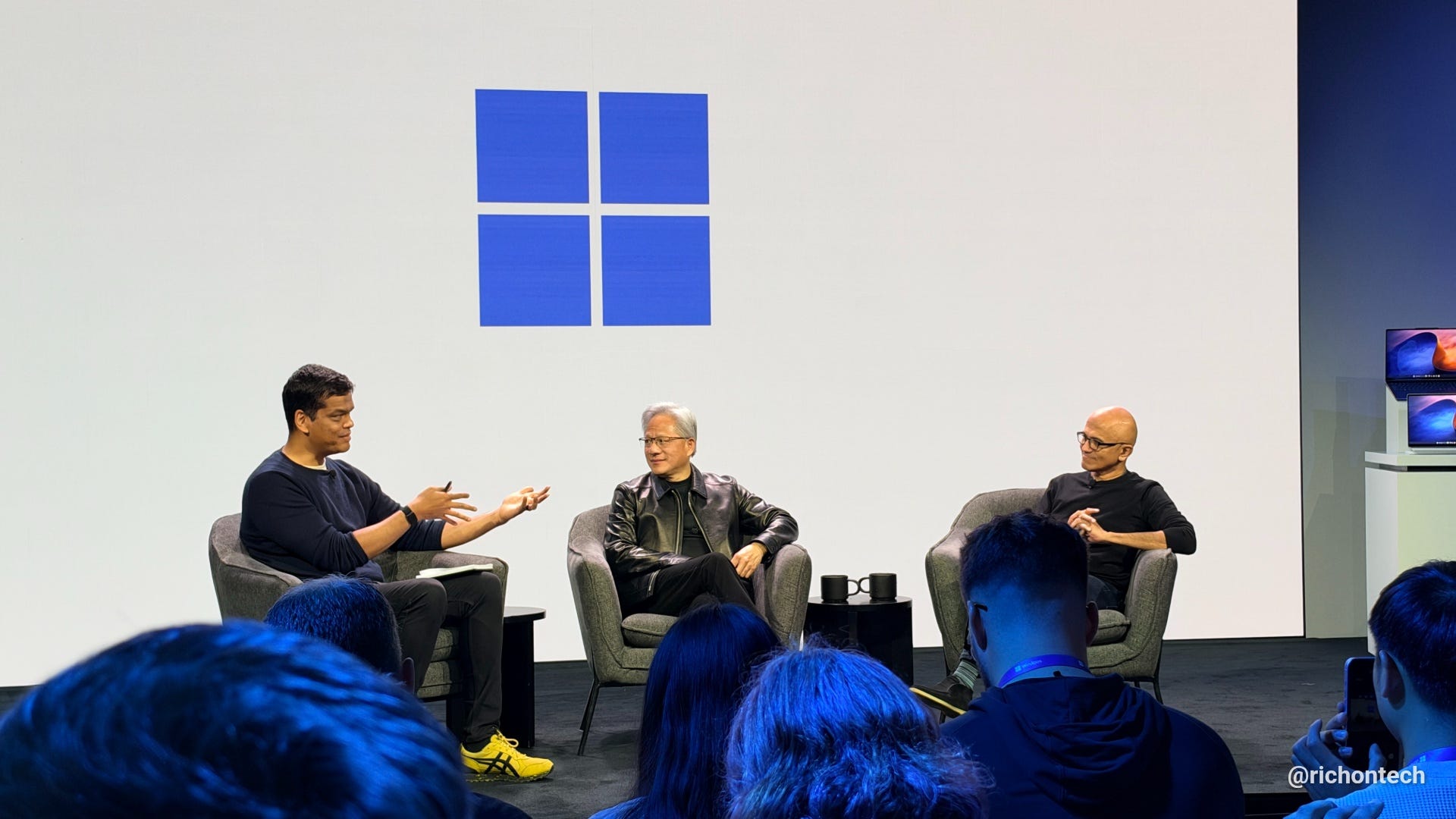
There were two big takeaways for me from a consumer perspective.
First, Microsoft is making Windows safer for AI agents. These are the AI tools that can actually take control of your computer and perform tasks on your behalf. The concern is that you don’t necessarily want an agent running wild on your computer, accessing all your files or doing things without your knowledge.
Microsoft is building new safeguards into Windows that limit what these agents can access and do. Think of it a bit like installing an app on your phone. You give it certain permissions instead of handing over the keys to your entire device.
Second, Microsoft showed off its new Surface Laptop Ultra. This thing is a powerhouse and essentially Microsoft’s answer to the MacBook Pro.
What’s unique is that it runs on a new Nvidia chip called RTX Spark. Nvidia is best known for graphics processors, but this chip combines the CPU, which handles everyday computing tasks, and the GPU, which handles graphics and other intensive processing, into one powerful package.
When I got my hands on the laptop, the first thing I noticed was its heft. This is a serious machine. Microsoft calls it its most powerful Surface Laptop ever, and it has a beautiful 15-inch touchscreen and just about every port you could want, including HDMI, USB-C, standard USB-A, an SD card reader, and a headphone jack.
One feature getting a lot of attention is what Microsoft calls the world’s first built-in magnetic USB-C charging port. You know how Apple’s MacBooks have MagSafe charging, where the cable pops off if someone trips over it? Microsoft has taken that idea a step further.
The charging cable attaches magnetically to a USB-C port, but here’s the neat part: it’s still a fully functional USB-C port. You can unplug the charger and use that same port for accessories. You’re not sacrificing an entire port just for charging.
The Surface Laptop Ultra starts at $2,599 and is available for preorder now, with shipping beginning October 16.
Ring’s new smart lock won’t lock you out
This week, I also caught up with Ring founder Jamie Siminoff, the guy who invented the video doorbell way back in the day.
I remember testing a very early version called the Doorbot. Back then, the biggest problem was flaky Wi-Fi, which they eventually figured out. Amazon went on to buy the company for more than a billion dollars, but that’s another story.
Now, Siminoff has come up with another clever invention: the Ring Smart Lock.
I’ve had an electronic door lock on my house for years, and one of my biggest concerns has always been the battery dying while I’m outside. That’s why many smart locks still have a physical key as a backup. But what’s the point of going keyless if you still have to carry around a key?
Siminoff agrees. As he explained to me, keys are old school. My car doesn’t need a physical key anymore, so why should my front door?
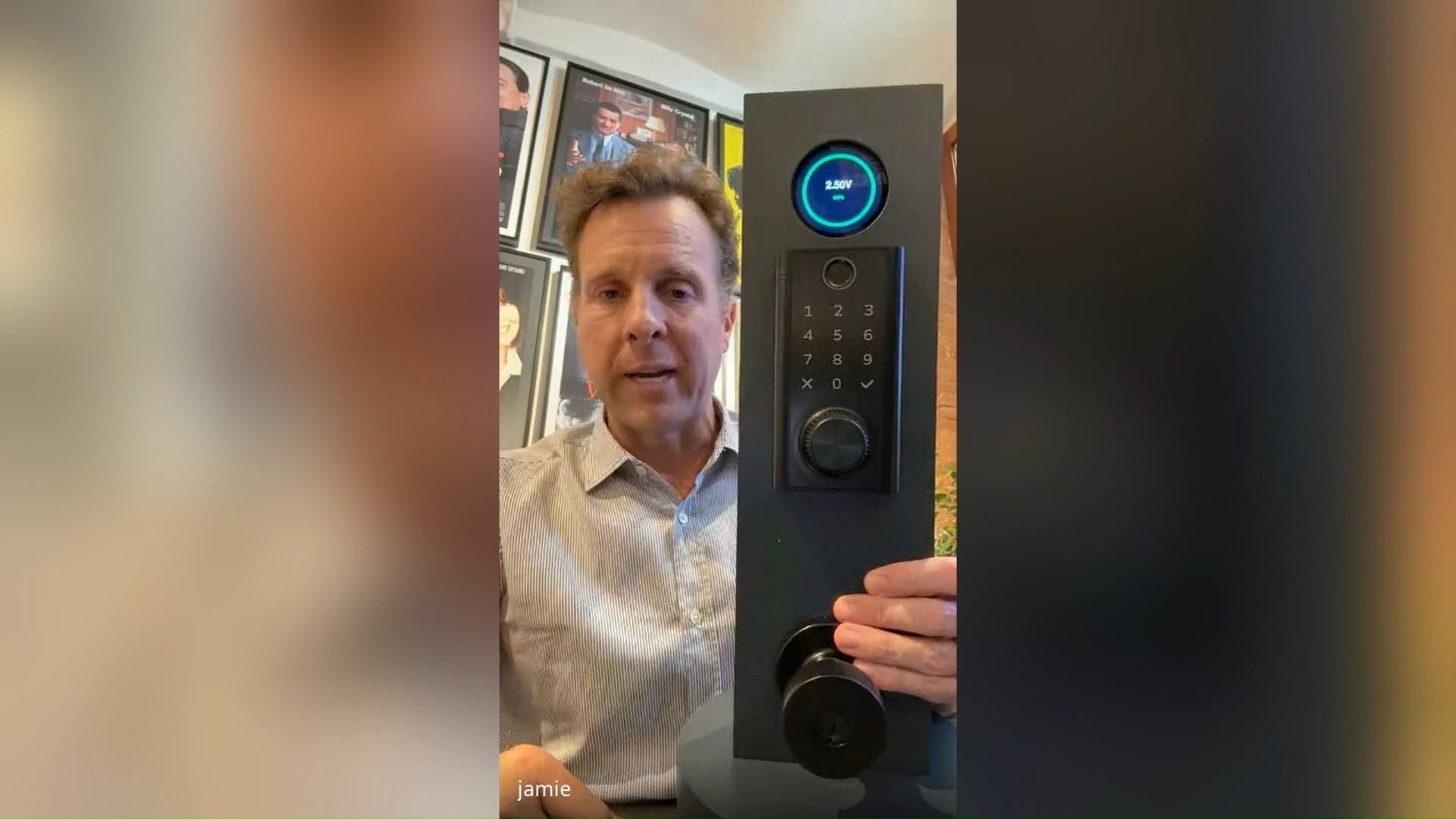
His solution is pretty ingenious. The new Ring Smart Lock has a little hand crank built into the front. If the battery dies, you simply turn the dial about five to ten times, generating enough power to wake up the lock and let you inside. Once you’re in, you can recharge the main battery, which is supposed to last about a year.
And yes, there’s no physical keyhole on this lock. You can unlock it with your fingerprint, a PIN, the Ring app, or Alexa.
The Ring Smart Lock will cost $250 when it arrives in early 2027. The dial adds a little bulk to the design, but I think it’s an interesting solution to a problem that’s kept some people from buying smart locks in the first place.
By the way, talking with Jamie is always fun, and I’ll likely share our full conversation on my radio show. What impresses me is that he’s still inventing all these years later. He started Ring, sold it to Amazon, stepped away for a while, and then came back to lead the company once again.
And here’s something I didn’t realize: Jamie told me he also invented Amazon Sidewalk, a technology he’s been working on for about a decade.
Sidewalk is pretty genius. It uses compatible Ring and Amazon devices throughout your neighborhood to create a shared, low-power wireless network. It’s designed for devices that don’t need a lot of bandwidth, like smart locks, trackers, and alarm sensors.
Amazon says the network now reaches about 95% of the U.S. population. And because it relies on devices throughout the neighborhood, your smart lock could stay connected even if your own Wi-Fi goes down, provided there’s another Sidewalk connection nearby.
Ring is going all in on Sidewalk, too. Its new alarm sensors use the network, which means you no longer need a traditional alarm base station for those compatible devices.
If you’re curious, you can check the coverage in your neighborhood.
Pretty neat. And as Jamie told me at the end of our conversation, his motto is “Always be inventing.”
Your 5 favorite finds from Amazon’s big sale
This week was Amazon’s big Prime Day sale, and I actually didn’t order much this time around, except for a new pair of sneakers. My wife bought a bunch of stuff, though, and I did notice some pretty decent deals.
Gadgets are getting more expensive these days, but there were still some good bargains to be found. I shared a list of more than 60 products I personally like and recommend, and it’s always fun to see which ones you gravitate toward.
Here are the top five products from my recommendations, based on your clicks:
DAZZY DOT rechargeable night light: I carry this thing everywhere I travel. It’s motion-activated, rechargeable, and I like it better than my previous recommendation because it charges via USB-C instead of the old Micro-USB cable. The one downside is that it doesn’t stand up on its own, which is kind of weird for a night light. But I just lay it flat, and it works fine.
Belkin portable USB-C power bank: I always recommend carrying a portable charger, and this 10,000mAh model is one of my favorites. The best part is the built-in USB-C cable, so you don’t have to remember to pack a separate one.
Syncwire MagSafe phone ring: There’s definitely a travel theme here! This magnetic ring attaches to the back of your phone, gives you a better grip, and doubles as a little kickstand for watching videos. It’s one of those simple accessories that’s super handy.
Amazon Basics 128GB USB flash drive: I always keep a USB flash drive like this in my bag. It has both USB-C and traditional USB-A connectors, so you can easily move files between phones and computers without worrying about which port they have.
Nomad universal travel cable: This is my absolute favorite travel cable. It’s a durable USB-C cable with built-in adapters for USB-A and Micro-USB, so it handles just about any charging situation you might encounter on a trip. Whether I’m on a plane, in a hotel, or charging an older gadget, this is the cable I always keep front and center in my travel bag.
You can check out my full list of more than 60 recommended products here. And remember, even though Prime Day is over, many of these products go on sale throughout the year.
Who knew a $15 TV antenna would be such a hit?
Who would have guessed that a story about TV antennas would turn out to be one of my most popular TV segments of the year?
It all started when a viewer emailed me and suggested I interview Tyler Kleinle, better known as Antenna Man on YouTube.
I reached out, had him on my radio show, and we had a great conversation. The response was so strong that I ended up ordering two of his recommended antennas to test for myself.
Both worked great, so I decided to turn the experience into a TV segment. And wouldn’t you know it, that story has become one of my most popular of the year.
If you haven’t seen it, take a look. It’s a great reminder that a simple $15 antenna can still pull in a whole bunch of TV programming for free, including sports. No subscription required!
This gadget turns your car window into a digital billboard
Another interesting story this week was about a guy I met who invented a unique way to display advertising on your car windows.
It’s called HoloGlass, and it uses a small projector and a special screen cut specifically to fit your car’s window. The projector beams images or video onto the screen, creating a pretty cool 3D-like effect that people outside the car can see.
The original idea was to help businesses advertise, but it turns out regular consumers want this technology, too. Imagine displaying your favorite sports team’s logo, a birthday message, or just something fun on your car window.
Of course, there’s the obvious concern about distracting other drivers. The company recommends showing videos only while parked and using static images when driving, where local laws allow it. Safety experts say keeping these displays off while driving is an even smarter.
The inventor also sees a future where robotaxis could turn their windows into digital billboards, creating another stream of advertising revenue.
HoloGlass starts at about $300, and the biggest limitation right now is that it works best at night. The company is working on a brighter version for daytime use.
Tech Tidbits
Was that made with AI? Google has launched a website where you can upload a photo, video, or audio clip to see if it was generated using AI. It’s called SynthID Detector, and there’s one big caveat: It only works with AI content that contains a compatible invisible watermark. That includes content from Google, OpenAI, Nvidia, and soon Apple. There are competing watermarking systems from Adobe and others, so this isn’t a foolproof way to detect everything made with AI, but it’s a start.
Robocalls are finally declining. According to YouMail, Americans received 48.2 billion robocalls over the past 12 months. That’s the lowest 12-month total since April 2021. Still, that’s a whole lot of unwanted calls! One of the biggest scams making the rounds right now involves supposedly pre-approved debt consolidation loans. If you get one of these calls and never applied for a loan, don’t call back.
ChatGPT wants to help teens get into college. OpenAI announced a new College Planner feature coming to ChatGPT for Teens. It will help students in grades 10 through 12 organize college applications, track deadlines, understand financial aid, and find scholarships. It won’t pick a college for you, but it could make the whole application process a little less overwhelming. More details here.
Google Docs now plays nicely with Markdown. Google Docs and Drive are adding native support for Markdown files. This is a big deal because AI tools love using Markdown, a simple text format that’s also popular with tech enthusiasts for long-term note-keeping. You can now open and edit Markdown files in Docs without converting them, and preview them in Drive with proper formatting. It’s rolling out now. More details here.
The best time to book holiday flights. Google Flights has released its latest travel data, and here’s the biggest takeaway: Forget the myth that you have to book flights on a Tuesday to save money. The day you actually fly matters much more. Leaving on a Monday and returning on a Tuesday or Wednesday can save about 14% compared to weekend travel. Taking a connecting flight instead of a nonstop can also save money. For Thanksgiving, the lowest fares have historically appeared about 34 days before departure, which puts us in October. For Christmas, it’s about 56 days out, with the best booking window typically falling between late October and mid-November. These are averages, not guarantees, so don’t wait if you see a good fare. Google also has data for domestic and international trips, spring break, summer vacations, Europe, Mexico, and the Caribbean. Check out the full report here.
I wrote this newsletter on Google’s new laptop
As I mentioned earlier, I’m writing this edition of the newsletter on a new laptop called a Googlebook.
Google has had Chromebooks for years, but this is a more premium, high-end take on the concept. Google worked with manufacturers including ASUS, Dell, Acer, HP, and Lenovo to create these laptops. Each company puts its own spin on the hardware, but the software is the same.
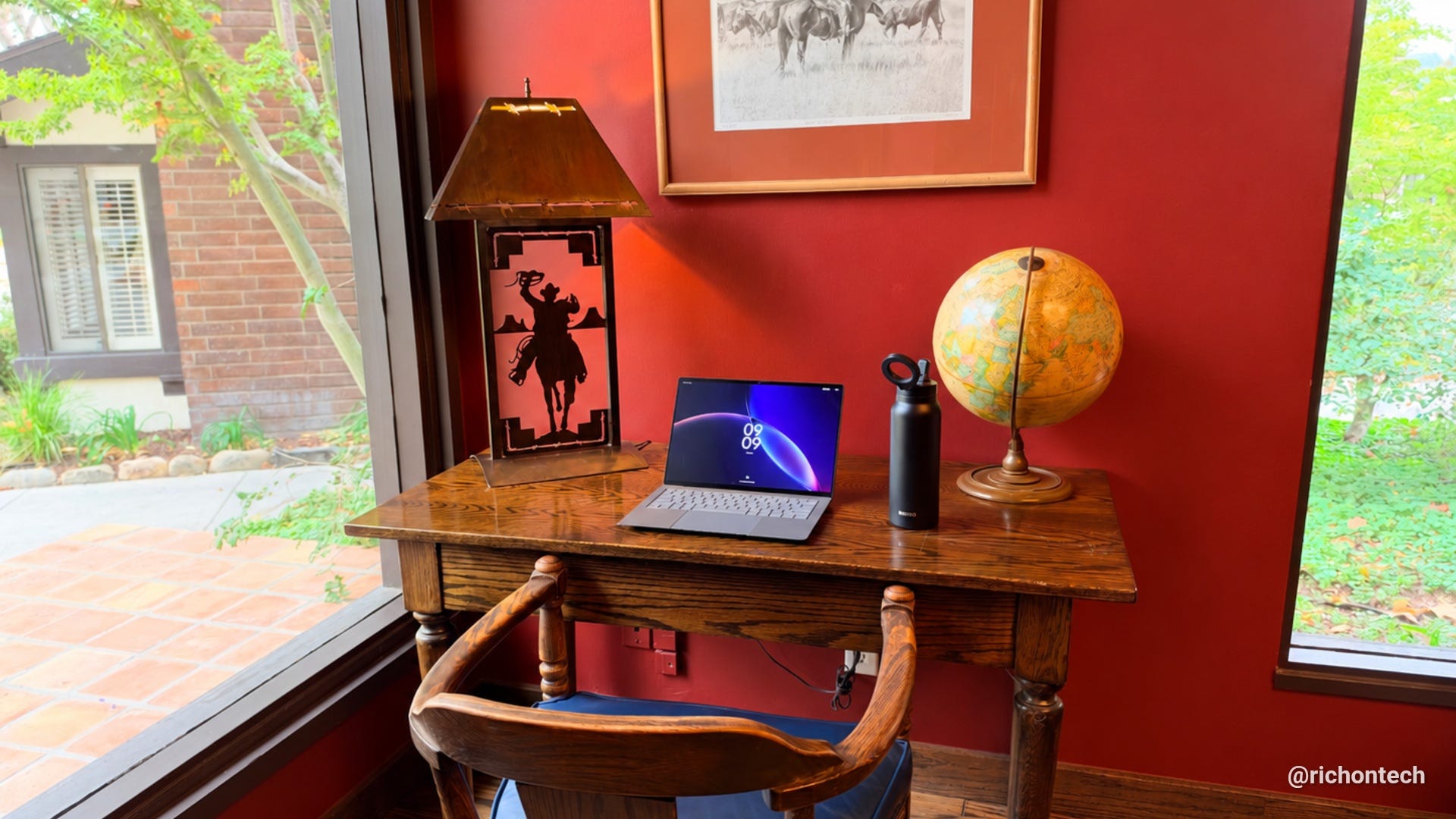
It’s called Googlebook OS, and it blends some of the best parts of ChromeOS and Android. The biggest difference is that you can run Android apps directly on the laptop. Well, most of them anyway. The one app I really needed, Evernote, isn’t compatible just yet.
Other than that, the software feels very Pixel-like. If you’ve ever used a Google Pixel phone, you’ll recognize the clean, simple interface.
There’s also a lot of AI built in. One feature is called Magic Pointer. Give your mouse pointer a little shake, and Gemini pops up with suggestions based on what’s on your screen. Think of it as right-clicking, but with AI superpowers.
Another feature I love is Rambler, Google’s built-in voice dictation tool. I’ve dictated this entire newsletter using it! It’s similar to Wispr Flow, my favorite voice-to-text app on other platforms, except Rambler comes built right into Googlebook OS for free. Considering that comparable dictation software can cost around $15 a month, this feature alone might be worth it.
One other neat thing I noticed while adding photos to this newsletter: the Googlebook automatically generates descriptions of your files in the Files app, making it much easier to search for and find them later.
As for the hardware, I’m testing the ASUS Googlebook 14, and I’m impressed. It’s super lightweight at just over two pounds, the keyboard feels great, the trackpad is great but still not quite as good as my MacBook Air, and the OLED touchscreen looks fantastic. It also has a nice matte finish that cuts down on glare. So far, battery life seems pretty good, too.
Another thing these laptops do really well is work with your Android phone. You can open apps from your phone right on the laptop screen without installing them separately, access files, and pick up a website where you left off on your phone.
Basically, a lot of the things we’ve come to expect from using a Mac and an iPhone together are now available for Android users, too.
Googlebooks start at $899, with the ASUS model I’m testing priced at $1,299. That’s definitely more expensive than a typical Chromebook, but you’re getting much more premium hardware.
And don’t worry if you already own a Chromebook. ChromeOS isn’t disappearing overnight. Google says it will continue supporting existing devices through mid-2034, with some eligible for a transition to the new operating system.
So, would I recommend a Googlebook? I’m not 100% there yet. The hardware is promising, and I really like the software, but some Android apps still need work. And let’s be real, I also want to see whether Google sticks with this platform for the long haul.
But if you’re looking for a clean, simple laptop that works well with your Android phone, has strong built-in security, and doesn’t require a lot of fuss, I think these are worth keeping an eye on.
The timing is a little unfortunate, though. With computer component prices climbing, I can’t help but think these laptops could have been a lot cheaper if they’d launched a year or two ago.
Alright, that’s going to do it for this week’s newsletter. Thanks so much for reading! If you enjoyed it, the best thing you can do is forward it to a friend who could use a little extra help keeping up with the world of tech. I always appreciate you spreading the word!
Rich