
A lot of the best inventions start with a simple problem. In this case, it was a teenager who kept having close calls with cars while walking through his neighborhood because there weren’t enough sidewalks.
I recently visited Polytechnic School in Pasadena to meet 17-year-old student inventor Cavon Hajamiri and see his invention in action. It’s called Hindsight, a wearable device designed to alert pedestrians when a vehicle, cyclist, or even another person is approaching from behind.
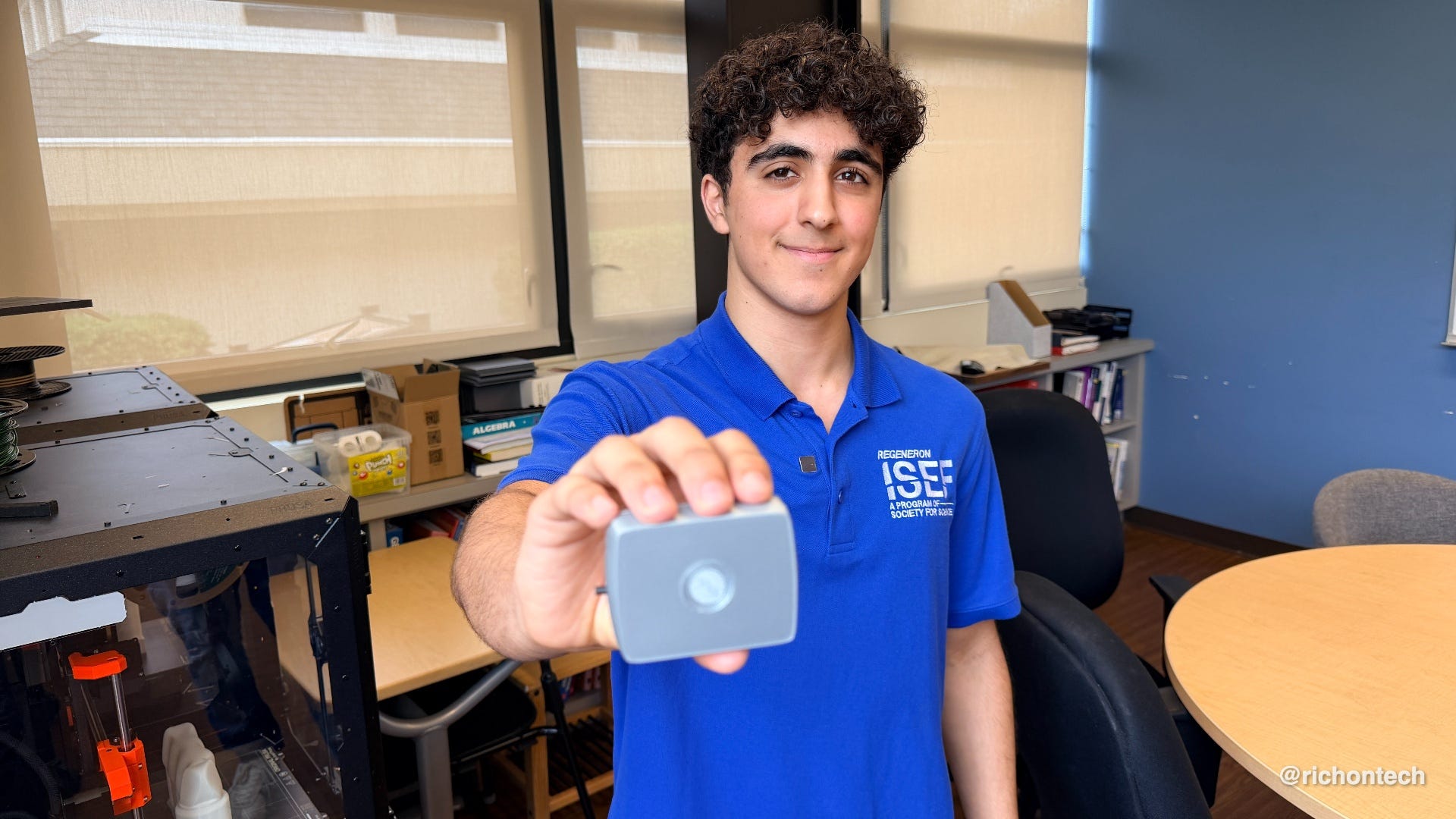
The idea first came to him when he was 13. Four years later, it’s evolved into a patented prototype.
The device uses a custom radar system and machine learning to identify what’s approaching from behind and determine whether it poses a potential hazard. If it does, the wearer gets an alert through a built-in speaker, a vibration on their phone, or audio in their headphones if they’re listening to music.
Watching the demonstration on a busy street, it was easy to understand the appeal. Most of us naturally look ahead while walking, not behind us. Hindsight is designed to add another layer of awareness without requiring you to constantly check over your shoulder.
Cavon worked with his math teacher, Jack Prater, a former NASA Jet Propulsion Laboratory engineer to help him tackle the complex signal processing needed to make the radar more accurate. Prater told me what impressed him most wasn’t just the idea, but Cavon’s willingness to teach himself new skills every time he hit a roadblock.
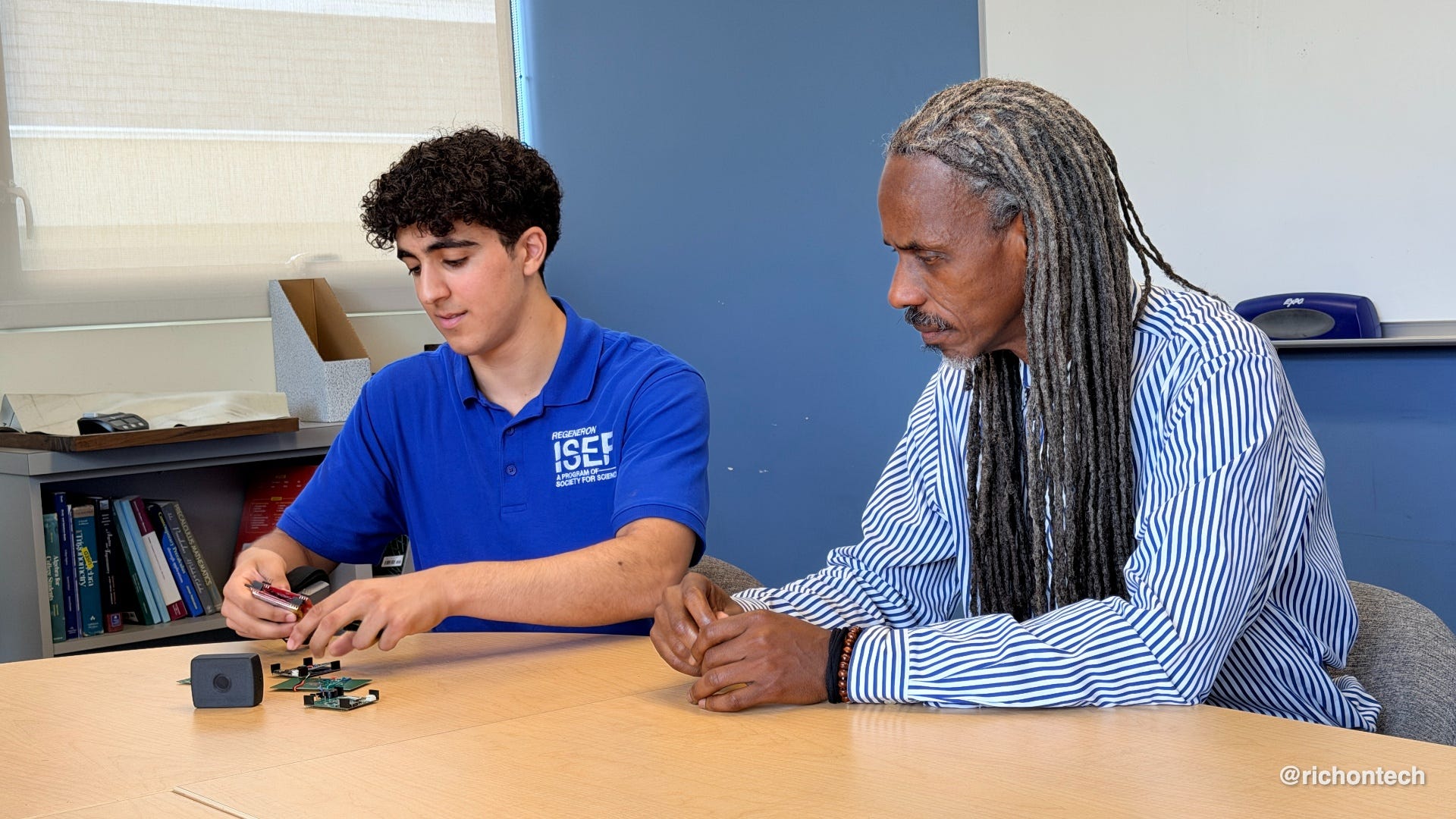
Cavon believes each module could eventually cost about $10 to manufacture, which could help keep the retail price affordable if the product reaches the market. He’s especially hopeful it could benefit older adults, people who are hard of hearing, and anyone who wants a little extra awareness while walking.
When I asked what advice he’d give other inventors, he said the key is accepting that failure isn’t a possibility, it’s a certainty. What matters is learning from it and moving forward.
The next step for Hindsight is a real-world pilot program. It’ll be interesting to see how the device performs outside the lab and whether this student project can become a product that helps make everyday walks a little safer.
Thank heaven for these amazing young people who are tomorrow's leaders. It's so refreshing to hear the positive and forward-looking youth of America, and they are the majority. We need to hear more positivity, not the negativity of the press these days.
He's walking on the wrong side of the street. Always walk facing traffic or so I was taught.